
Last updated October 16, 2026
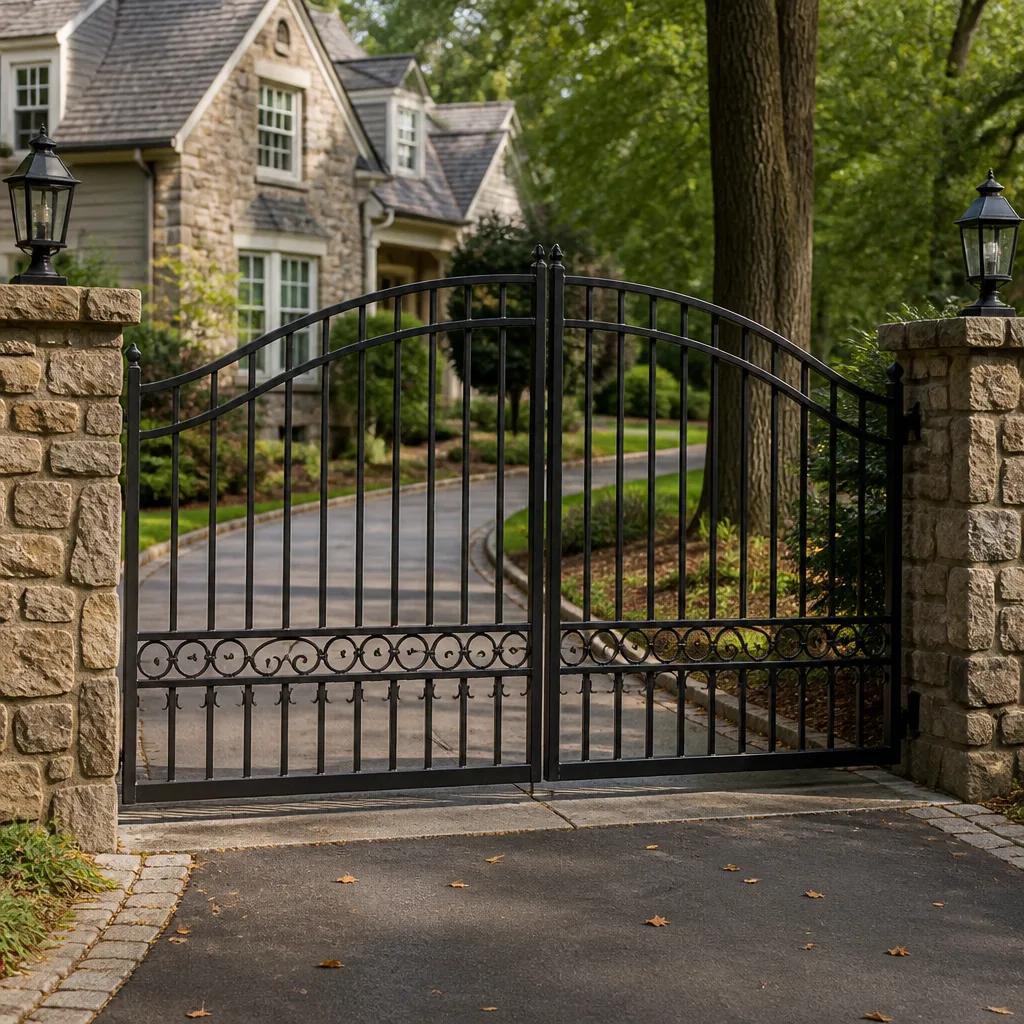 Wrought iron
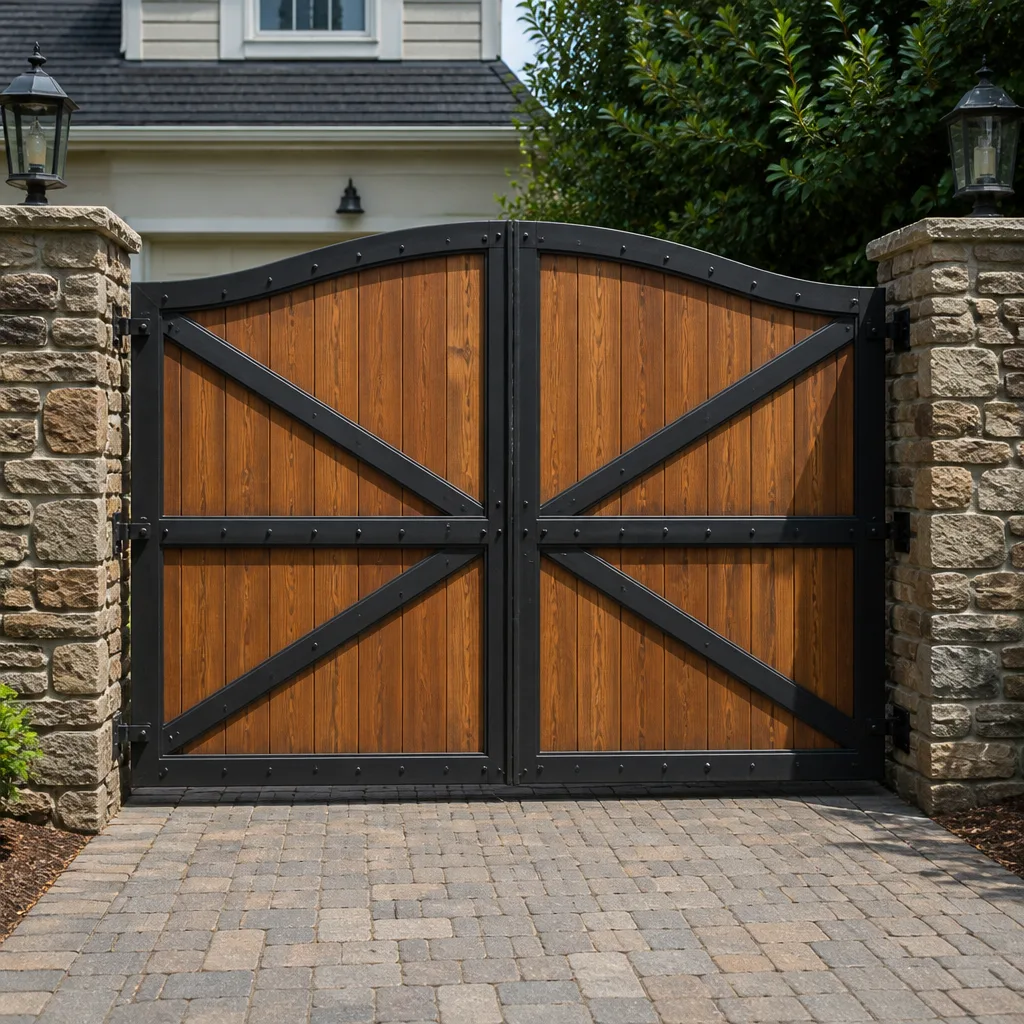 Wood & steel frame
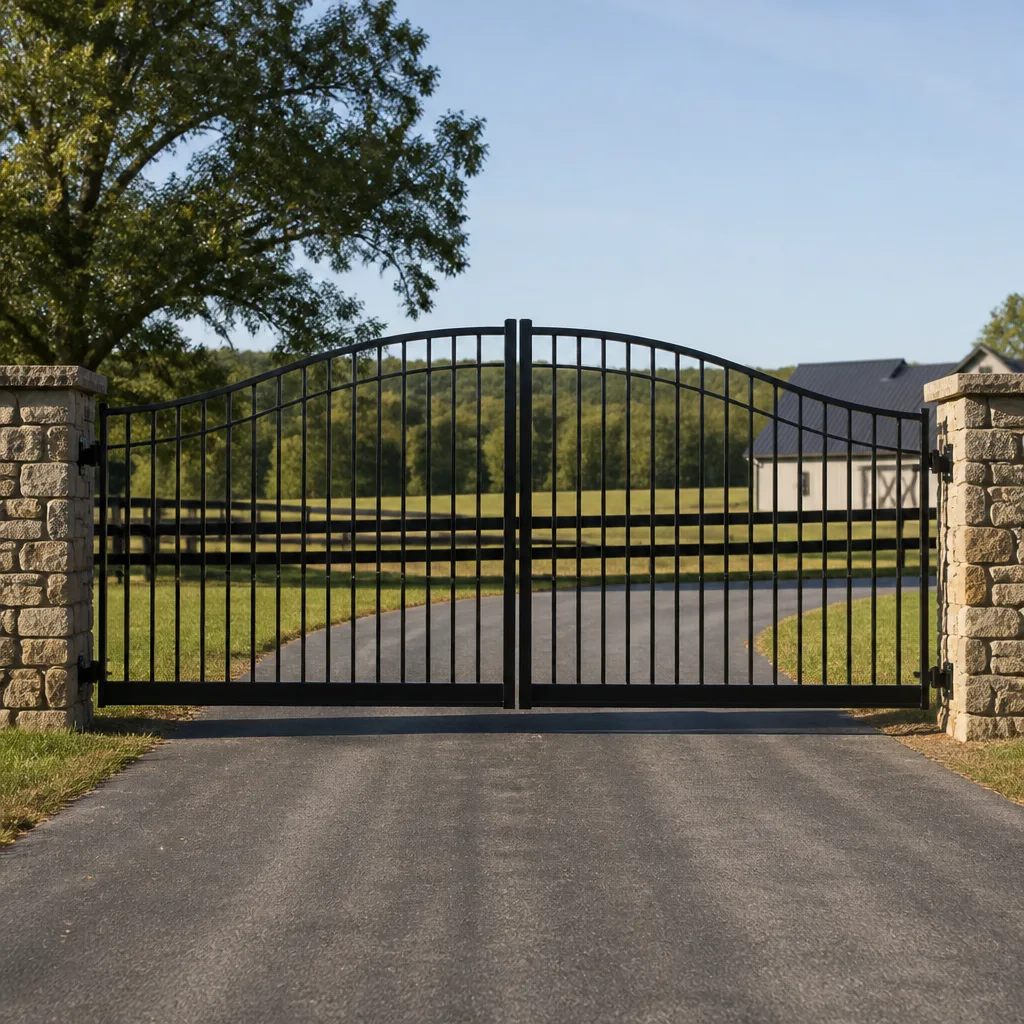 Farm & ranch
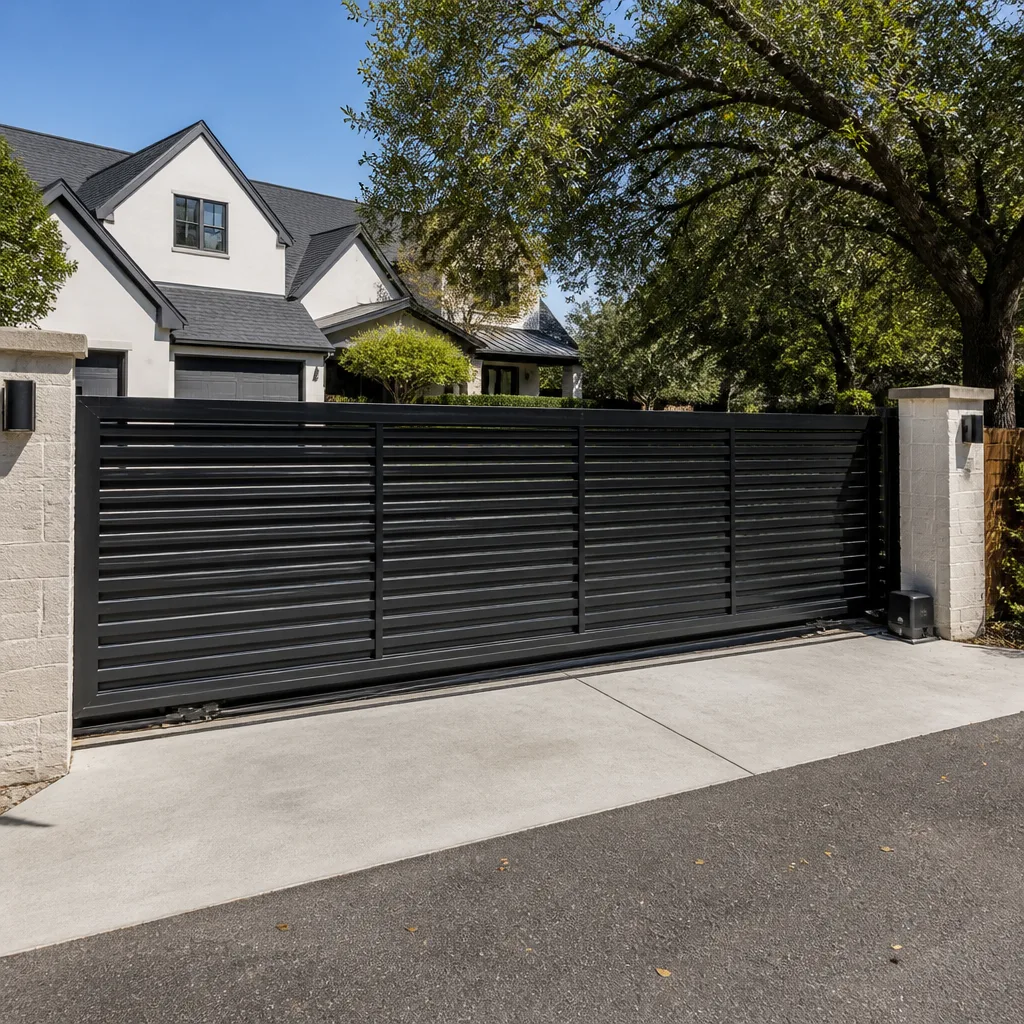 Sliding driveway gates
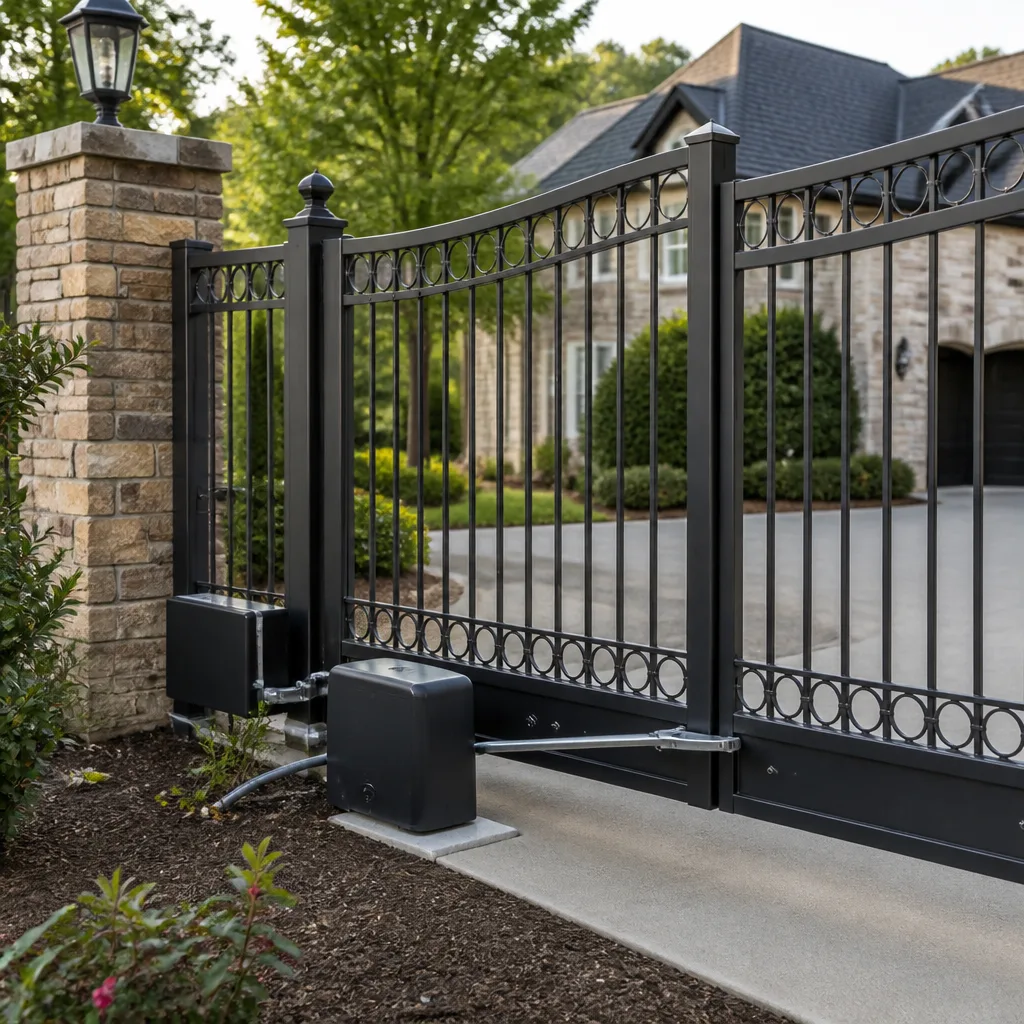 LiftMaster operators
Free on-site gate assessment - hinges, posts, and your LiftMaster or Nice gate operator checked before anything is quoted
The assessment is free and the quote is the invoice.
Get your free estimateGate Repair Permits, Codes & Inspections in FL: What You Need to Know
In Duval County, a homeowner who swaps a failed gate motor for a new unit of the same type rarely needs a permit. But the moment that repair turns into a replacement with different voltage, new conduit, or a reset structural post, the work crosses into permit territory. Most Jacksonville homeowners find this out the hard way, often at closing, when a title search flags an unpermitted improvement. This guide explains exactly where the line sits under Florida Building Code and Duval County rules, how HOAs complicate the picture, and what an inspector actually checks when gate work goes through the proper channel.
Styles & brands we work with
Quick Answer
Automated gate repairs in Jacksonville generally do not require a permit when the work is a like-for-like swap of a motor, board, or sensor with no change to the electrical load or the gate’s structural frame. A permit is required when the gate operator is changed to a different model with a higher amp draw, when new wiring or conduit is run, or when a post is reset, a foundation is poured, or a gate leaf is significantly modified. Before any permitted work closes out, Duval County requires an inspection, and unpermitted gate work can surface during a title search and delay a sale.
Table of Contents
- What Florida Building Code Says About Automated Gates
- Which Gate Repairs Trigger a Permit in Duval County
- Like-for-Like Repairs: What’s Exempt and What’s Not
- How HOA Architectural Review Interacts with County Permitting
- The Gate Work Inspection Process in Jacksonville
- Checking for Unpermitted Gate Work on Your Property
- Common Mistakes to Avoid
- When to Call a Professional
- Frequently Asked Questions
- The Bottom Line
What Florida Building Code Says About Automated Gates
Florida Building Code (FBC) Chapter 30, which adopts the UL 325 standard for gate operators and automatic gates, governs every automated gate system installed in the state. The code exists for one reason above all: safety. Automated gates produce severe pinch points and crush zones, and Florida’s code mandates specific protections that any permitted gate installation or substantial repair must satisfy.
The code requires that every automated gate be equipped with a primary entrapment protection system and a secondary entrapment protection device. For swing gates, that typically means a monitored safety edge or a photo eye sensor paired with an inherent entrapment sensor built into the operator. Slide gates, which are common throughout Jacksonville’s older subdivisions and rural properties on the Westside and North Jacksonville, require a hard-wired sensing edge along the leading edge of the gate panel, plus a photo eye covering the travel path.
Clearance requirements are also specified. A swing gate must maintain a minimum of 2 inches of clearance between the gate and any fixed object, such as a brick pillar or a fence post, at every point in its arc of travel. A slide gate must keep a minimum of 2 inches between the gate panel and the fence or wall it slides along. Homeowners who retrofit a newer, larger gate panel onto an older operator sometimes discover that the new panel violates this clearance rule, and the inspector will fail the job until the geometry is corrected.
The code also limits gate operator force. An operator cannot exert more than 40 pounds of force on a gate leaf at any point. This force limitation is what drives the requirement for monitoring and reversing circuitry in newer operators, and it’s why a gate technician who installs a motor without checking the force settings can produce a gate that passes the eye test but fails a code inspection. At Carver Gate Repair, we set force profiles on every operator we install or service as part of our Gate Repair services, and we check clearances as part of every permitted job, because the code’s safety provisions are not optional and the inspector will verify them.
Which Gate Repairs Trigger a Permit in Duval County
Duval County’s Building Inspection Division follows the Florida Building Code for permit thresholds. The practical test is simple: does the work alter the permanent structure of the property, the electrical system, or the foundation? If yes, a permit is generally required. If the work is a component swap that returns the system to its original operating condition, it is generally exempt.
Here is a plain breakdown of common gate repair scopes in Jacksonville and where each falls:
- Gate motor replacement, same make and model, no wire changes: No permit. This is a component replacement.
- Gate motor replacement, different brand or model, same voltage and amp draw: Typically no permit, but a technician should verify the operator’s entrapment protection meets the current UL 325 edition. Duval County has accepted like-for-like swaps of this type without a permit in most cases.
- Gate motor replacement with a larger operator or different voltage (110V to 220V, or solar to hardwired): Permit required. The electrical load and possibly the circuit breaker must change, and that is an electrical scope.
- Reset or replacement of a gate post, hinge post, or operator post in concrete: Permit required. This is structural work.
- New concrete pad for an operator or a slide gate track: Permit required. Poured concrete is regulated work.
- New wiring, conduit, or a loop detector cut into the driveway: Permit required. Cutting into a driveway or running new electrical requires an electrical permit, often a combination permit through Duval County.
- Replacing a control board, limit switch, photo eye, or safety edge: No permit. These are component-level repairs.
- Adding automation to a previously manual gate: Permit required. This is a change of use and a new electrical installation.
One point that catches a lot of Jacksonville homeowners off guard: the permit requirement attaches to the scope of work, not to how much the work costs. A $400 post reset in concrete triggers a permit, while a $2,000 control board replacement does not. The cost is irrelevant to the building department. The scope is what matters.
Like-for-Like Repairs: What’s Exempt and What’s Not
The term “like-for-like” gets thrown around a lot in gate repair, and in Duval County it means something specific. A like-for-like repair replaces an existing component with an equivalent component that does not change the system’s electrical characteristics, physical dimensions, or safety configuration. A Like-for-like swap does not require a permit. A same-function swap that changes the system’s characteristics does.
Consider two real scenarios from work across Jacksonville:
- Exempt scenario: A LiftMaster LA400 swing operator fails on an Arlington homeowner’s gate. The technician replaces it with another LA400, connects the same wiring, and re-verifies the safety edges. The gate opens and closes as it did before. This is a component replacement. No permit, no inspection.
- Permitted scenario: A Viking swing operator on a Mandarin property is swapped for a DoorKing 9150. The DoorKing draws a different amperage, requires a different control board layout, and the technician runs a new power line from the subpanel. This work changes the electrical load and the installation. Duval County would treat this as a permit-required scope because the electrical work changed.
The distinction can get granular. Replacing a gate opener’s control board with an OEM replacement board is exempt. Replacing it with an aftermarket board from a third-party supplier is generally still exempt if the board is designed as a direct replacement. But if the aftermarket board changes the operator’s entrapment sensing configuration from monitored to non-monitored, the work technically falls outside like-for-like because the safety system changed.
For homeowners who want more guidance, our blog offers resources like Gate Repair Warning Signs: A Jacksonville Homeowner’s Reference Guide, and the Duval County Building Inspection Division will answer a scope question by phone. A technician who does permitted gate work in Jacksonville every week should also be able to tell you before work starts whether the job is permit-required or exempt, and should put that determination in writing. We include the permit determination in every written price for gate work that involves operators, posts, or wiring, so there is no disagreement later.
How HOA Architectural Review Intersects with County Permitting
Jacksonville has a large share of HOA-governed communities, from Deercreek and Pablo Creek to Bartram Springs and the master-planned subdivisions along Gate Parkway and Kernan Boulevard. In those neighborhoods, a gate repair or replacement can sit under two different authorities at once: the county building division and the HOA’s architectural review committee.
Here is the part most homeowners miss: the two processes operate independently, and neither one replaces the other. A permit issued by Duval County does not satisfy an HOA’s architectural covenant, and an HOA approval letter does not satisfy the building division. They govern different things. The county governs safety, electrical, and structural code compliance. The HOA governs aesthetics, materials, height, color, and placement within the lot.
When the two conflict, the more restrictive requirement generally controls. If an HOA requires a specific gate material or finish that is more expensive than what the county code would allow, the HOA rule governs because it is more restrictive. If Duval County requires a wider clearance around the gate than the HOA’s design guideline anticipates, the county requirement governs because it is a safety code, and an HOA cannot waive a safety code.
A practical sequence for any Jacksonville homeowner planning gate work in an HOA community:
- Pull the HOA’s architectural guidelines and confirm the gate’s design, material, and placement requirements.
- Submit the HOA architectural review form with drawings or photos of the proposed gate and operator.
- While waiting for HOA approval, determine whether the work scope triggers a Duval County permit.
- If a permit is required, schedule the work with a technician who can pull the permit and coordinate the inspection.
- Complete the work, pass the county inspection, and then send the closed permit to the HOA for their records if they request it.
Skipping either step creates a problem later. Unapproved HOA work can draw a demand letter and a forced correction. Unpermitted county work shows up on a title search. Doing both keeps the record clean.
The Gate Work Inspection Process in Jacksonville
When gate work in Jacksonville does require a permit, the inspection is the final step before the job is considered complete. Duval County’s Building Inspection Division schedules inspections on a next-day or two-day cycle for most residential work, depending on the inspector’s route and workload. A gate job that is ready for inspection today will typically be seen within one to two business days.
For a permitted gate motor or automation project, the inspector is looking at four things:
- UL 325 compliance: The operator must carry a UL 325 listing. The inspector will check the data plate on the motor.
- Entrapment protection: The primary and secondary entrapment devices must be present, wired, and operational. The inspector may test the photo eye by blocking the beam and pressing the close command.
- Clearances: The inspector will check the minimum clearance points described above, particularly around hinges, pillars, and the travel arc.
- Electrical work: If a new circuit was run, the inspector will check the breaker, the disconnect, and the wiring method. Conduit must be secured, and any outdoor junction box must be weather-rated.
- Document the existing condition. Photograph the gate, the operator, the electrical connections, and the safety devices.
- Contact a gate specialist who pulls permits. The technician will assess whether the installation meets current code. If it does not, the fix may involve adding entrapment protection, adjusting clearances, or rewiring.
- File a permit retroactively. Duval County will permit existing work on a case-by-case basis. The inspector will visit and check the installation against current code.
- Correct any deficiencies and schedule the inspection. Once the work passes, the permit is closed, and the property record is clean.
- Assuming all gate motor replacements are permit-exempt. A same-model swap is exempt. A different model with a different amperage draw or voltage is not. The distinction is electrical, not cosmetic.
- Treating HOA approval as a substitute for a county permit. An HOA approval letter never satisfies the Duval County Building Inspection Division. The two processes are separate, and both must be completed.
- Skipping the entrapment protection check on an older gate. A gate installed before current UL 325 standards may lack a monitored safety edge or photo eye. A repair that touches the operator often triggers a requirement to bring entrapment protection current.
- Pouring a concrete pad for an operator without a permit. This is structural work, and it is one of the most common unpermitted improvements found on Jacksonville title searches.
- Forgetting that a slide gate needs a driveway-mounted loop detector. Jacksonville properties with slide gates, common in Mandarin and along the St. Johns River, often need a loop detector cut into the driveway for the gate to operate safely. That cut is an electrical and civil scope, and it triggers permitting.
- Hiring a generalist who does not know UL 325. A general contractor who treats a gate operator as a side job may set force limits too high or wire the safety edge incorrectly. The inspector will catch it, and the re-inspection will cost the homeowner a second visit.
The inspection takes 15 to 30 minutes. The homeowner does not need to be present if the permit holder’s technician is on site, but it is helpful to be there to hear any notes first-hand. If the inspector finds a deficiency, the correction is usually minor, and a re-inspection can be scheduled once the fix is made.
One Jacksonville-specific note: during the summer rainy season, inspectors sometimes cannot complete exterior electrical checks if the equipment is wet or if lightning is active. That is a safety call on the inspector’s part, not a scheduling failure. A gate operator pad is typically a dry test, but the inspector’s discretion governs.
Checking for Unpermitted Gate Work on Your Property
If you bought your Jacksonville home after the gate was already automated, or if a previous owner had gate work done, it is worth confirming whether that work was permitted. The fastest way is to pull the property’s permit history from the Duval County Building Inspection Division. The county maintains a searchable online permit database where you can enter the address and pull every permit on record. If the gate motor, post, or automation does not appear in that history, and the work looks newer than the last permit record, the gate work was likely done without a permit.
What remediation looks like when unpermitted gate work is discovered:
The cost of retroactive permitting is far lower than the cost of a failed closing. A title company that finds unpermitted work will typically require the seller to resolve it before the sale proceeds, and resolution under a closing deadline is always more expensive than resolving it on your own schedule. If you are preparing to sell a Jacksonville home with an automated gate, checking the permit history early is one of the cheapest forms of title insurance you can buy.
Common Mistakes to Avoid
When to Call a Professional
Any gate work that touches the operator’s electrical supply, the structural posts, or the concrete is work that should go through a professional who pulls permits and coordinates inspections. This includes motor replacements that change the voltage or amperage, post resets, new concrete pads, slide gate track installation, and any repair where the gate’s entrapment protection is missing or outdated. A gate that closes on a person or a car is not a repair conversation, it is a safety conversation, and the code exists precisely because these incidents happen. Carver Gate Repair Jacksonville specializes in gate and gate motor work across Duval County, and we’ve handled permitted gate repair in Jacksonville for years, as detailed in our guide on How to Hire a Gate Repair Contractor in Jacksonville: A Step-by-Step Guide. Every job starts with a written determination on permit scope and a written price before any work begins. For a free estimate in Jacksonville, call (904) 490-8559.
Frequently Asked Questions
Only if the new motor changes the electrical load, the voltage, or the operator type. A same-model replacement is exempt. A different brand with the same voltage and amp draw is usually exempt in Duval County. If the new motor requires new wiring or a new breaker, the job is permit-required. If you are unsure, call (904) 490-8559 and we’ll make the determination before quoting.
Duval County permit fees for residential gate work typically run between $100 and $400, depending on the scope, plus any electrical or structural sub-scopes. The permit fee is small compared to the title problem an unpermitted improvement creates. The exact fee is quoted at the time the permit is pulled, and it’s included in your written price if you work with a contractor who pulls permits.
You can sell, but the unpermitted work will likely surface during the title search or the buyer’s inspection. The title company may require the seller to resolve the permit before closing, often on a compressed timeline. Retrofitting a permit is faster and cheaper when it’s done voluntarily, before the property is under contract.
The on-site inspection usually takes 15 to 30 minutes. Scheduling runs on a one to two day cycle with Duval County’s Building Inspection Division. The technician who pulled the permit is typically on site for the inspection, and the homeowner does not need to be present.
In most Jacksonville HOA communities, a motor replacement that is hidden inside the existing operator housing does not require architectural review. A visible change, such as a new gate panel, a new operator arm style, or a new concrete pad, usually does. Check your HOA’s architectural guidelines before the work starts, because the county permit does not cover the HOA’s separate process.
The inspector writes a correction notice, and the technician fixes the deficiency, typically within a day or two. Re-inspection is scheduled through Duval County. Most failures we see in Jacksonville involve missing entrapment protection, clearance violations, or unsecured conduit, and all three are correctable without major rework. Call (904) 490-8559 if you have a gate that failed an inspection and need it corrected.
The Bottom Line
Gate repair permits in Florida come down to scope. Component swaps stay exempt. Anything that changes the electrical load, the structure, or the concrete gets permitted. Duval County enforces the Florida Building Code’s UL 325 safety provisions on every permitted gate job, and the inspection is fast when the work is done correctly the first time. Homeowners in Jacksonville who check their permit history before listing a property avoid the worst gate-related surprises at closing, and can find more guides & resources on our blog. When gate work is done through a professional who pulls permits, writes the price before work starts, and stands behind the repair for a full year, the property record stays clean and the gate stays safe. For questions about your specific gate in Jacksonville, call (904) 490-8559 and ask for a free estimate.
Written by Lonnie Burke, Owner at Carver Gate Repair Jacksonville, serving Jacksonville since 2008.
For full service details, see our Carver Gate Repair Jacksonville home page, or learn more about Gate Repair in Jacksonville, Gate Installation in Jacksonville, and Gate Motor Repair in Jacksonville.
See the difference
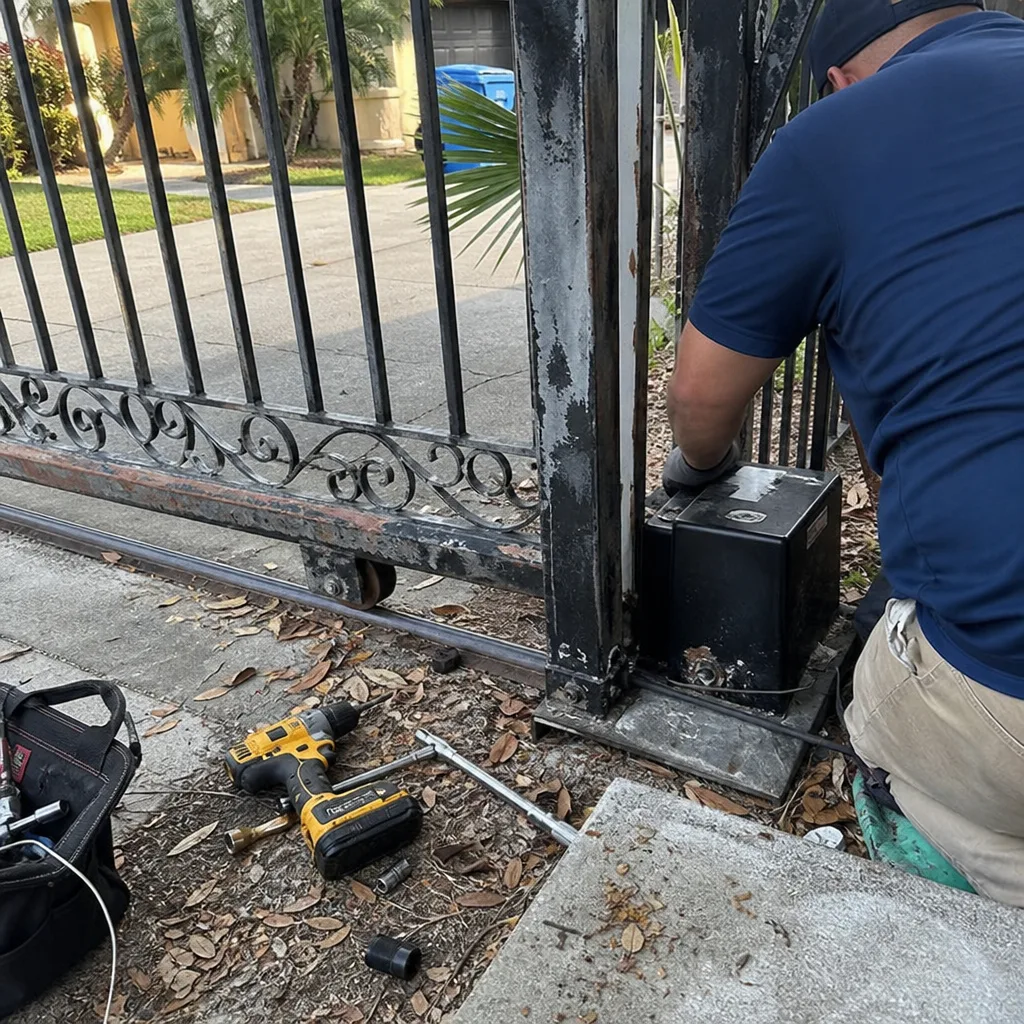 Before
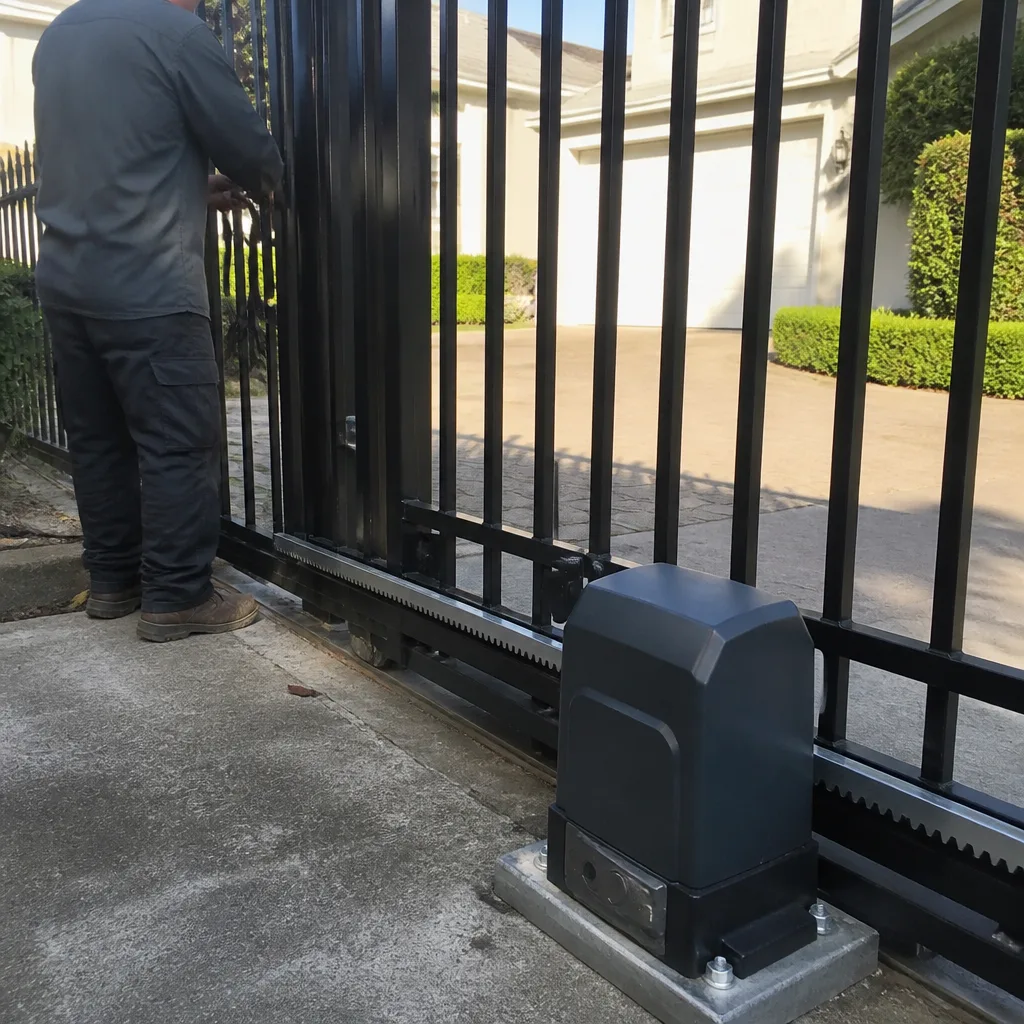 After
After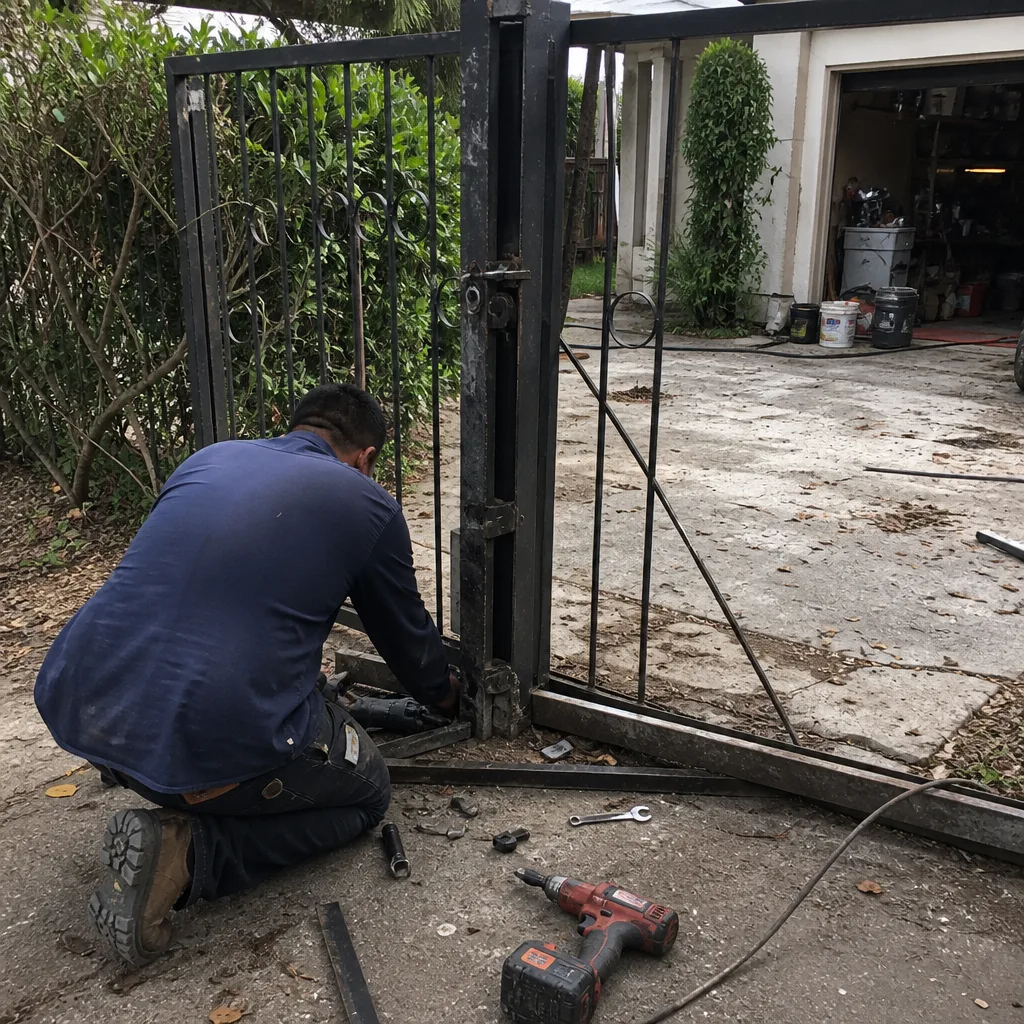 Before
 After
After Before
 After
After