
Last updated October 16, 2026
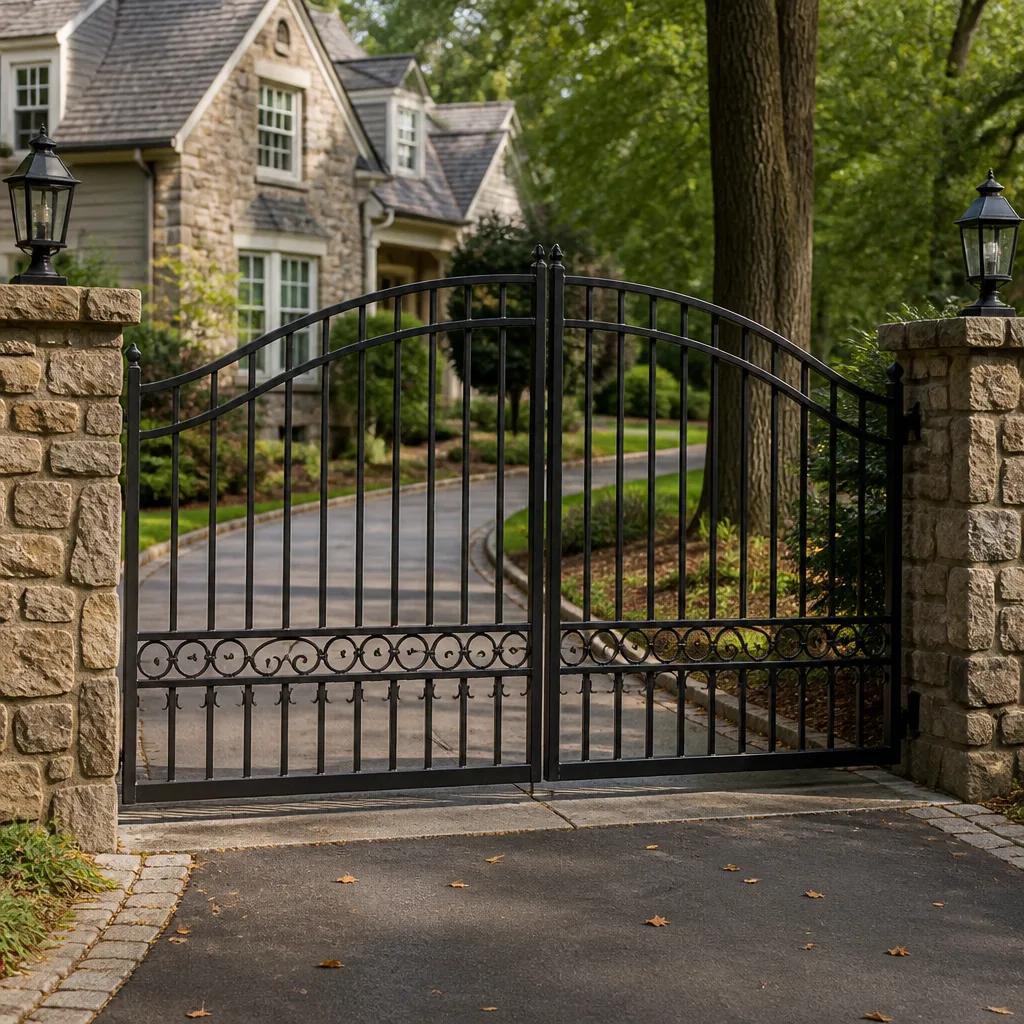 Wrought iron
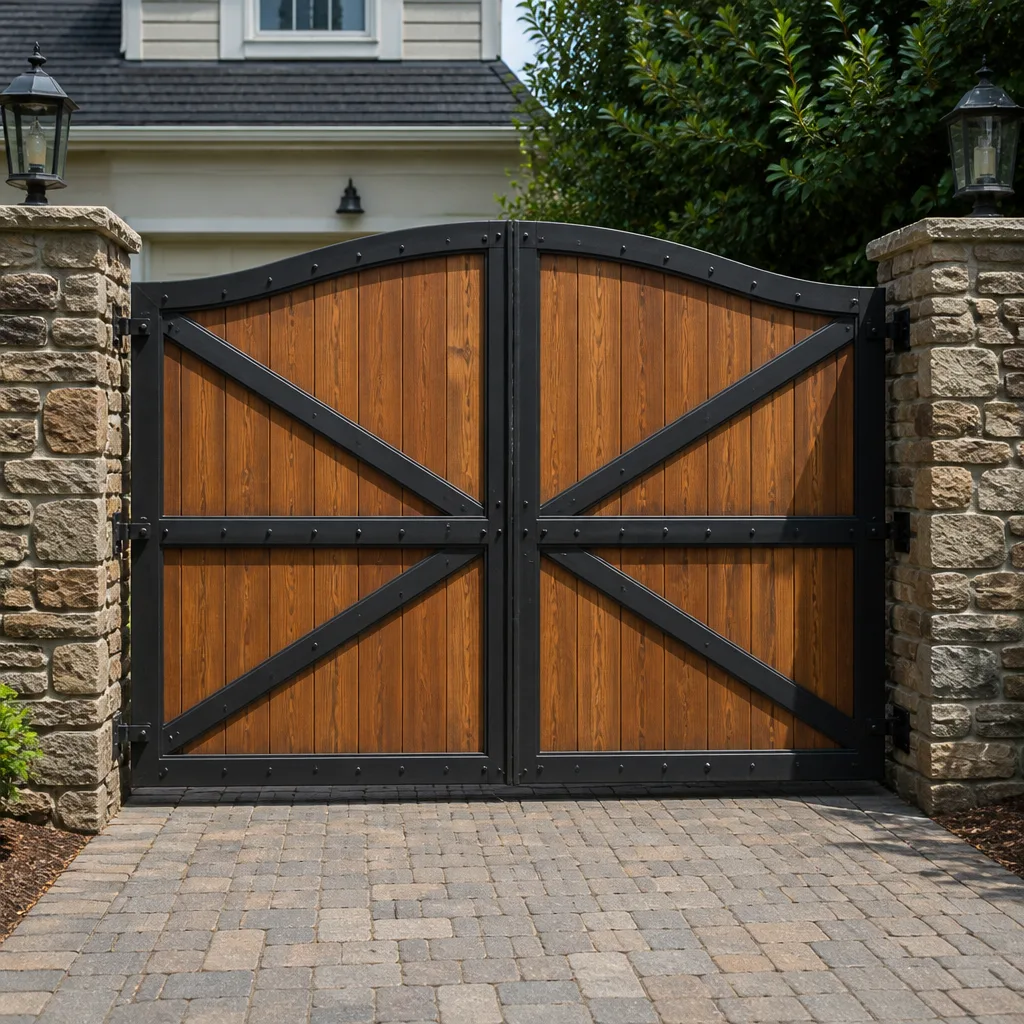 Wood & steel frame
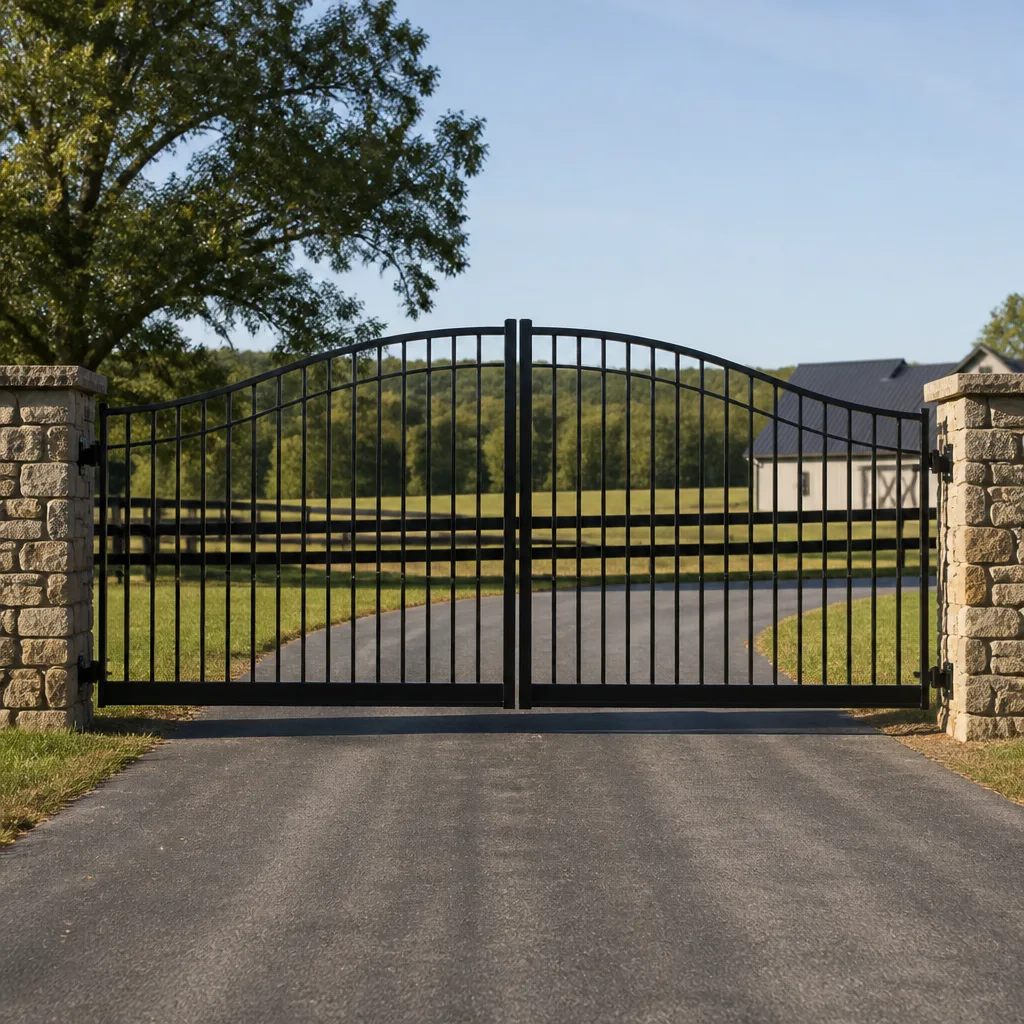 Farm & ranch
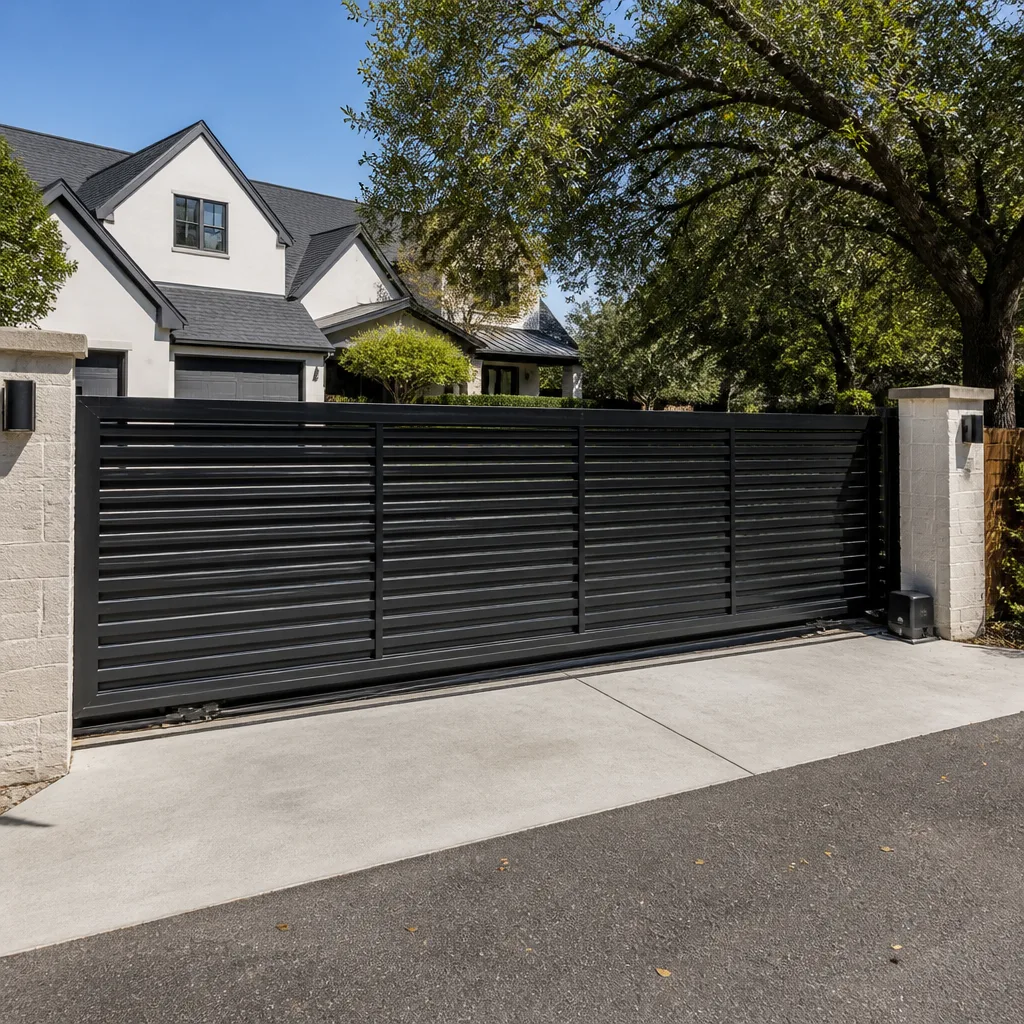 Sliding driveway gates
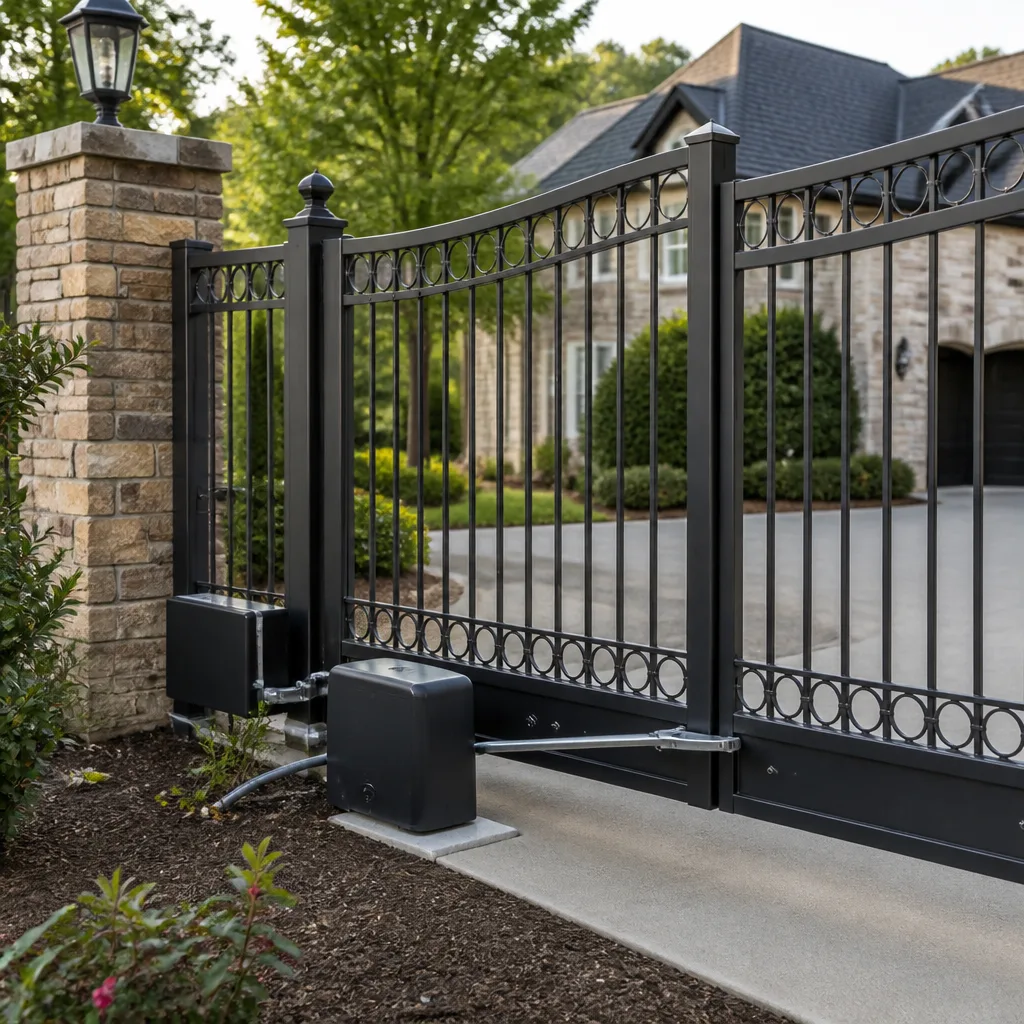 LiftMaster operators
Free on-site gate assessment - hinges, posts, and your LiftMaster or Nice gate operator checked before anything is quoted
The assessment is free and the quote is the invoice.
Get your free estimateDIY vs Professional Gate Repair: The Jacksonville Homeowner’s Decision Guide
Here’s a number most Jacksonville homeowners don’t expect: roughly 8 out of 10 gate failures involve something other than what you can see from the driveway. A gate that won’t close isn’t usually a bad gear. It’s a limit switch that drifted, a loop detector that lost its tuning, or a control board that got cooked by a lightning strike three weeks ago. This guide, along with our Gate Repair Maintenance Checklist for Jacksonville Homeowners, sorts Jacksonville gate problems into three columns: the ones you can fix with a weekend and a wrench, the ones that look simple but aren’t, and the ones you should never touch. By the end, you will know exactly which category your gate falls into, what each repair path costs in the Jacksonville market, and where Florida liability law draws a line between homeowner maintenance and unpermitted electrical work.
Quick Answer
DIY gate repair in Jacksonville is practical for about 20% of problems: the mechanical, low-voltage, and cosmetic fixes like replacing a wheel, tightening hinge bolts, or cleaning a photo eye. The other 80% involves electrical systems, torsion or counterbalance forces, or code-compliance elements where a mistake can injure someone or void a warranty. For that 80%, a professional gate technician is not a luxury; it is the cheaper option once you account for the cost of undoing a failed repair.
Styles & brands we work with
Table of Contents
- What DIY Can Actually Handle: The 20% That’s Safe
- The Gray Zone: Repairs That Look Easy But Are Not
- Professional-Only Repairs: The 80% You Should Not Touch
- Florida Liability and the Unpermitted Electrical Work Problem
- Parts, Tools, and the Contractor-Only Distribution Wall
- The Hidden Cost of a Failed DIY Attempt
- What Homeowners Should Do Between Professional Service
- Jacksonville-Specific Factors: Salt Air, Lightning, and Permits
What DIY Can Actually Handle: The 20% That’s Safe
A gate is a machine, and like any machine, some parts are designed to wear and be replaced. What separates a safe DIY repair from a dangerous one in Jacksonville is not the size of the tool; it is the absence of stored energy and the absence of line voltage. If a part is held on with bolts, moves by hand, and carries no electrical current, it is generally fair game.
The most common DIY-suitable repairs we see across Jacksonville neighborhoods like Mandarin, Arlington, and San Marco include:
- Replacing a gate wheel or roller. Sliding gates ride on wheels that wear flat over time. This is a jack-up-the-gate-and-swap-the-wheel job.
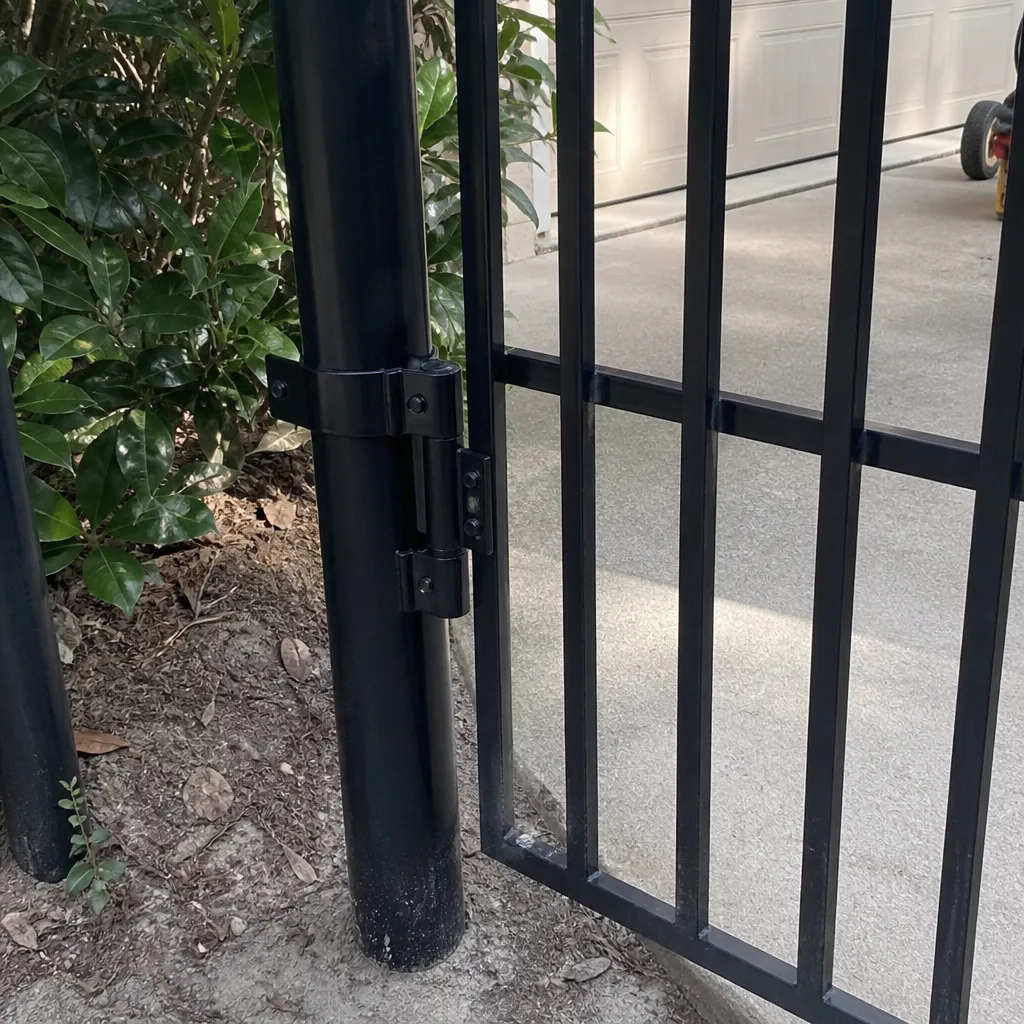
- Tightening hinge bolts on a swing gate. Sag is usually loose hardware, not a bent post. A socket set handles it.
- Cleaning photo eyes and reflectors. Dust, spider webs, and St. Augustine grass clippings block the beam. A rag and glass cleaner fix most false reversals.
- Lubricating hinges and rollers. White lithium grease on the pivot points, once or twice a year.
- Replacing a car visor remote battery. If the gate opens from the keypad but not the remote, try a fresh CR2032 before calling anyone.
These jobs share three traits: no stored spring or counterbalance force, no 120V or 240V wiring, and no interaction with the operator’s control board. That last point matters more than it seems. Even a mechanically simple part can become an electrical problem if it is connected to the operator’s safety circuit.
Jacksonville’s humidity accelerates some wear patterns but does not change the skills required. What it does change is the hardware you buy. Cheap zinc-plated bolts from a big-box store rust out in two seasons this close to the St. Johns River. Stainless steel fasteners are the standard for outdoor gate hardware in Jacksonville, and if you’re doing your own wheel replacement, buy accordingly.
The Gray Zone: Repairs That Look Easy But Are Not
This is where most Jacksonville DIY gate repairs go sideways. The job looks mechanical from the outside. A spring attaches to a bracket. A limit switch is just a small lever. But the part is wired into a system, and the system does not care that you were only trying to fix the wobble.
Consider the classic example: adjusting gate travel limits on a LiftMaster SL595 operator. On the surface, it is turning a screw until the gate stops where it should. But travel limits on modern operators work together with the obstruction detection system. If you set the close limit too tight, the gate may bind against the physical stop. If you set it too loose, the operator may not register that the gate has reached its closed position at all. Either scenario can disable the auto-reverse function. The gate stops reversing when it should. You will not get a warning light or an error code. You will get a gate that closes with full force on a child or a car bumper, and the operator’s safety sensor system will not catch it because the programming has been drifted out of alignment.
Other gray-zone repairs include:
- Replacing a gate spring or tension rod. The spring itself is mechanical, but it is under load. If it releases while you are removing it, the stored energy has to go somewhere.
- Adjusting the close and open limit switches. These are wired into the operator’s logic board, and changing their position changes how the operator interprets two different safety inputs.
- Replacing a capacitor on a swing arm operator. The capacitor stores an electrical charge even after the unit is unplugged. Discharging it incorrectly is a real shock risk.
- Adjusting the sensitivity of the obstruction detection circuit. This is a dial or a button on the board, but it sets the force the gate will use before it reverses. Set it too high and the gate will crush instead of stop.
If you’re not sure which column a repair falls in, the honest test is a simple question: does the part you’re removing have a wire attached to it or stored energy inside it? If the answer is yes, it’s not a gray-zone job. It’s a professional job you haven’t admitted to yourself yet.
Professional-Only Repairs: The 80% You Should Not Touch
Here is the decision matrix, laid out plainly. These are the repairs we classify as professional-only, the reason for the classification, and what happens when the repair goes wrong.
- Operator motor replacement (LiftMaster, FAAC, BFT, Linear, Viking, Ghost Controls, DoorKing, Elite, Mighty Mule). The motor is integrated with the gearbox, the limit system, and the control board. Replacing it correctly requires matching the new motor’s torque curve to the gate’s weight and travel. Replacing it incorrectly leaves you with a gate that opens or closes at the wrong speed, which changes every safety calculation in the system.
- Control board replacement or reprogramming. The board is the brain. It stores every limit setting, every safety parameter, every access entry. Swap the board without backing up the programming and you’re starting from scratch on a system you may not have the documentation for. Many boards also require a factory initialization sequence that is not in the owner’s manual.
- Gate spring and counterbalance work. Swing gates and some slide gate operators use springs or weights to offset the gate leaf. These components are under constant load. When a spring bracket fails or a cable snaps, the load releases in an uncontrolled direction. Professionals use the right rigging and follow a specific release sequence.
- Loop detector installation or repair. The loop is a wire buried in the driveway that tells the gate a car is present. Installing or repairing one means cutting a channel in the concrete or asphalt, layering the wire correctly, and tuning the detector to the specific frequency of that loop. A poorly tuned loop either doesn’t detect the car at all or detects ghost signals and opens the gate for nothing.
- Any repair involving the 120V or 240V power feed. Gate operators run on line voltage, and the transformer is inside the operator housing. Working on the power feed means working inside a live electrical enclosure. Florida building code requires a permitted electrical connection for gate operators, and an unpermitted electrical modification is a liability problem in addition to a shock risk.
- Welding or fabricating gate frames. A cracked gate frame or broken hinge post is structural, not mechanical. It needs welding or replacement by someone who understands load distribution on a gate leaf.
The pattern here is not “this is hard.” The pattern is “this is integrated.” Gate systems fail in layers, and the professional-only repairs are all repairs where the part you need to fix is connected to two or more other systems that you cannot see without opening the housing and testing the circuit.
For gate motor repair in Jacksonville, we have seen the same failure sequence repeat across dozens of households: a homeowner replaces a motor using a YouTube video, the gate works for two weeks, then the limit system drifts or the obstruction detection stops responding, and the repair cost is now higher than the original quote because the technician has to undo the first repair before installing the right one. The motor is not the problem. The motor is part of a system.
Florida Liability and the Unpermitted Electrical Work Problem
This is the section most DIY gate guides skip, and it matters in Jacksonville more than in most markets because Florida’s premises liability standards are not forgiving to unpermitted electrical work. If a homeowner performs electrical work on a gate operator without pulling a permit, that work is not just a code violation. It is evidence in a lawsuit.
Here is how it works in a typical Florida premises liability claim. A visitor pulls into your driveway. The gate closes. The obstruction detection fails to reverse because the sensitivity setting was adjusted by someone who did not know the correct torque threshold. The gate hits the visitor’s vehicle or, worse, the visitor. The homeowner is asked, under oath, who last worked on the gate operator. If the answer is “I did,” the next question is “do you have a permit for that electrical work?” There is no answer that helps.
Florida Statute 553.79 requires permits for electrical work, and many Jacksonville gate operators are wired to a dedicated circuit. The Duval County building code follows the Florida Building Code, which references the National Electrical Code for all gate operator installations. A permit is required when the operator is connected to line voltage. Homeowners are allowed to pull owner-builder permits under Florida law, which means the permit itself is not the barrier. The barrier is the inspection. Owner-builder electrical work still has to pass the same inspection as licensed electrical work, and most homeowners do not know what the inspector is looking for.
The practical bottom line for a Jacksonville homeowner: if the repair involves the power feed, the circuit board, or any safety sensor that is wired into the operator’s logic, an unpermitted repair creates a paper trail that a plaintiff’s attorney will use. The cost of hiring a licensed gate technician to perform the repair correctly, with the wiring done to code, is less than the cost of defending even an unsuccessful premises claim.
None of this means you cannot maintain your gate yourself. It means the line between maintenance and electrical work has legal consequences that don’t show up on a YouTube tutorial.
Parts, Tools, and the Contractor-Only Distribution Wall
There is a practical reason DIY gate repair has a ceiling in Jacksonville, and it has nothing to do with skill. The parts you need for most meaningful repairs are not sold to consumers.
Gate motor distributors in Florida mostly sell through contractor accounts. Brands like FAAC, BFT, and Linear protect their dealer networks by requiring proof of training or an account relationship before selling control boards, gearboxes, and full motor assemblies to retail customers. If you search for a BFT control board or a FAAC limit switch online, you will find either used parts, gray-market sellers with no warranty, or listings that say “call for availability.” A homeowner calling a Jacksonville distributor directly will typically be told the part is contractor-only.
Consumer channels handle the easy stuff: gate wheels, hinges, remote transmitters, keypads, photo eyes, and batteries. Big-box stores and Amazon carry these, although the quality varies widely. The parts that actually fail inside the operator housing, the boards, the relays, the capacitors, the limit assemblies, are all behind the contractor wall.
Tools are a related problem. Most homeowners own a socket set and a multimeter. A proper gate technician’s truck in Jacksonville carries: a loop detector tester, a force gauge for measuring gate closing force, a specific set of spanners for European gate motor brands, a programming module for the major operator lines, and spare boards and limit switches for common models. Some of these tools cost less than a thousand dollars, but the programming modules and the distributor relationships are not for sale at any price you’d pay for one repair.
The distribution wall has a specific consequence for Jacksonville homeowners. If a repair fails halfway through, a DIYer cannot source the replacement part to finish the job. You are left with a disassembled gate and no path forward. That is not a cost problem. It is a security problem, because the gate is now stuck open or stuck shut, and “stuck open” means your backyard, your pool, your kids, and your vehicles are all accessible from the street.
The Hidden Cost of a Failed DIY Attempt
The most expensive Gate Repair we see in Jacksonville is the one that starts as a $40 DIY project and ends as a $900 professional repair, with a partially disassembled gate sitting in the driveway for three days in between. Here is how that cost structure actually works.
When a homeowner starts a repair and cannot finish it, the technician who arrives is not looking at a clean failure. They are looking at a system that has been partially disassembled, possibly with parts removed, screws misplaced, wiring unplugged, and settings changed. The original fault is still there, but it is now buried under the question of what the homeowner did and did not disturb. The technician has to diagnose two problems: the original failure and the incomplete repair. That takes additional time, and it takes a more experienced technician because the fault tree is now longer.
In the Jacksonville market, a straightforward gate repair that a technician can diagnose and fix in a single visit typically falls in the $180 to $480 range, as detailed in our Gate Repair Cost Breakdown: The Jacksonville Homeowner’s Reference for 2026. A repair that requires un-doing a DIY attempt, re-installing the original components in the correct configuration, then diagnosing and fixing the underlying fault, frequently lands between $500 and $950. The difference is not the cost of parts. It is the cost of additional diagnostic labor and the time required to verify that the homeowner’s partial work did not introduce a new fault into the safety system.
There is also a warranty angle. Most gate operator manufacturers void the warranty if the unit has been opened by someone other than an authorized service provider. This is stated in the fine print of every major brand’s manual. If your LiftMaster, FAAC, BFT, or Linear operator is still under warranty and you open the housing to replace a part yourself, you may be voiding that warranty for the remainder of the term. The repair you performed to save money is now going to be charged to you in full because the manufacturer will not cover it.
The honest math from our experience in Jacksonville: DIY is only cheaper when the repair works the first time. For the mechanical and cosmetic jobs, it usually does. For the electrical and structural jobs, it usually does not. Failed DIY attempts do occasionally happen in the 20% category too, which is covered by the same logic: a stripped bolt on the wrong part can create a four-hour job that should have been a fifteen-minute one.
What Homeowners Should Do Between Professional Service
This is the section most guides miss. There is a wide middle ground between “call a pro for everything” and “tear open the operator housing and see what happens.” That middle ground is preventive maintenance, and it is where Jacksonville homeowners get the best return on their time.
Here is a twice-a-year maintenance routine that takes about an hour and requires only a wrench, a voltmeter, and a can of white lithium grease. It is safe, it is effective, and it will extend the life of your gate and operator.
- Inspect every fastener on the gate leaf. Start at the hinge side of a swing gate or the wheel side of a slide gate. Wiggle the gate by hand. If there is play, tighten the bolts. A gate that moves more than a quarter inch at the free end is putting extra wear on the operator gearbox.
- Check the gate wheels or hinges for flat spots and rust. Sliding gate wheels wear unevenly if the gate is out of level. A flat-spotted wheel makes the gate jump, which damages the operator over time. Hinges on a swing gate should be free of visible rust and should not squeak.
- Clean the photo eyes. Use a dry rag first, then a lightly dampened one, then glass cleaner if needed. Jacksonville’s sandy soil and high pollen counts coat the lenses faster than most homeowners expect. A dirty photo eye is the single most common cause of a gate that refuses to close, because the beam is interrupted by a layer of dust the owner can’t see.
- Lubricate the moving points. White lithium grease on hinge pins, wheel axles, and the chain drive if you have one. Do not use WD-40. WD-40 is a solvent, not a lubricant, and it will strip the existing grease and leave the metal dry.
- Test the auto-reverse function with a physical object. Place a cardboard box or a traffic cone in the gate’s path and close the gate. It should reverse immediately on contact. If it does not, the obstruction detection sensitivity has drifted out of spec. Do not adjust it yourself. Note it and call a technician.
- Check the battery backup. If your operator has a battery backup, check that it is charged and that the status light is green. In Jacksonville’s hurricane seasons, a working battery backup is the difference between a secure gate and a wide-open driveway during a power outage.
This maintenance routine is not a substitute for professional service, though you can find more guides & resources on our blog. It is a way to catch small problems before they become large ones, and it is a way to know whether the gate system is operating correctly between professional visits. A homeowner who performs this routine twice a year will catch a failing wheel, a loose hinge, or a dirty photo eye before any of them causes a breakdown.
Jacksonville-Specific Factors: Salt Air, Lightning, and Permits
Jacksonville is not just any market for gate repair. Three local factors change the way gates wear, fail, and get repaired here, and none of them appear in generic DIY guides.
Salt air and humidity. Jacksonville sits close enough to the Atlantic and the St. Johns River that the air carries measurable salt, especially in neighborhoods east of the Intracoastal like Atlantic Beach, Neptune Beach, and Ponte Vedra. Salt accelerates corrosion on gate hardware, hinges, and electrical connections. Hardware that lasts a decade in Atlanta may last five years here. The practical consequence: when you see rust on a gate component, it is not cosmetic. It is a sign that the component is nearing the end of its structural life. Salt air also attacks control board connections. Many gate problems in Jacksonville that look like programming failures are actually corroded terminals on the board.
Lightning and electrical surges. North Central Florida has one of the highest lightning strike densities in the United States. A gate operator with a long run of low-voltage wire from the control board to the actuator acts as an antenna for induced surges. A nearby lightning strike, even one not on your property, can induce enough current in a gate’s control wiring to damage the board. This is why many Jacksonville gate systems fail after summer thunderstorms. A surge protector on the operator’s power feed does not help with induced surges on low-voltage lines; only proper grounding and surge protection on the control circuit does. A homeowner cannot diagnose this without testing the board’s inputs.
Permitting and code. Duval County and the surrounding municipalities (Clay County, St. Johns County, Nassau County) each have their own permitting process for gate installations and electrical work, but all of them follow the Florida Building Code. A gate operator connected to line voltage requires an electrical permit. A new gate installation on a driveway that serves a home may also require a building permit, depending on the height, the proximity to the property line, and the presence of a swimming pool. Jacksonville’s Hurricane Resistant Building Code applies to gate structures that serve as windbreaks or sit within the storm surge zone, which affects the size of the posts and the anchoring requirements.
For a complete gate installation in Jacksonville, the permit requirements apply from the first day. A homeowner who installs a gate without a permit creates the same liability exposure described earlier, and the gate may fail an inspection if the installation is ever reviewed as part of a insurance claim or a real estate transaction.
Common Mistakes to Avoid
- Adjusting the limit switches without the programming guide. Modern operators from LiftMaster, FAAC, and BFT use digital limit settings that interact with the safety system. Turning screws or pressing buttons without the guide is the single most common way homeowners void a warranty and create a safety hazard.
- Using WD-40 on gate hinges and wheels. It washes out the existing lubricant and leaves the metal unprotected against Jacksonville’s salt and humidity. Use white lithium grease.
- Sourcing parts from gray-market sellers. That “genuine FAAC control board” on eBay may be a refurbished unit with a burned relay channel. No warranty, no return, no recourse.
- Replacing an operator motor without checking the gearbox. The motor and gearbox wear together. A new motor on a worn gearbox transfers the failure to the gearbox within months.
- Performing unpermitted electrical work. In Duval County, it’s a code violation that becomes a liability problem the first time someone gets hurt on your property.
- Ignoring a gate that intermittently reverses or stops mid-travel. Intermittent behavior is usually a failing sensor or a corroded connection, not a fluke. The false reversal is the gate telling you the obstruction detection is misreading its inputs.
- Assuming a DIY repair that worked once means all DIY repairs are fine. The 20/80 split is not about your ability. It is about the system’s complexity. A wheel replacement and a board replacement are different categories of work.
See the difference
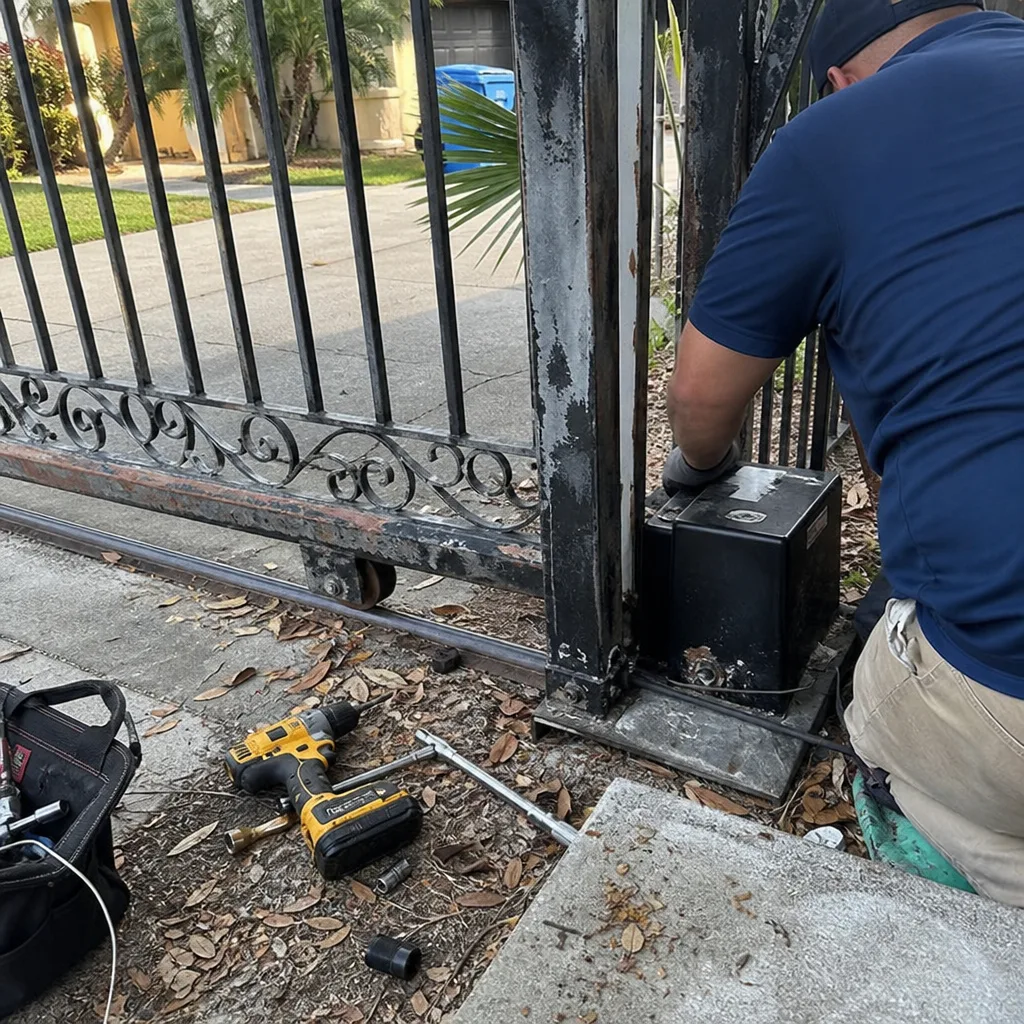 Before
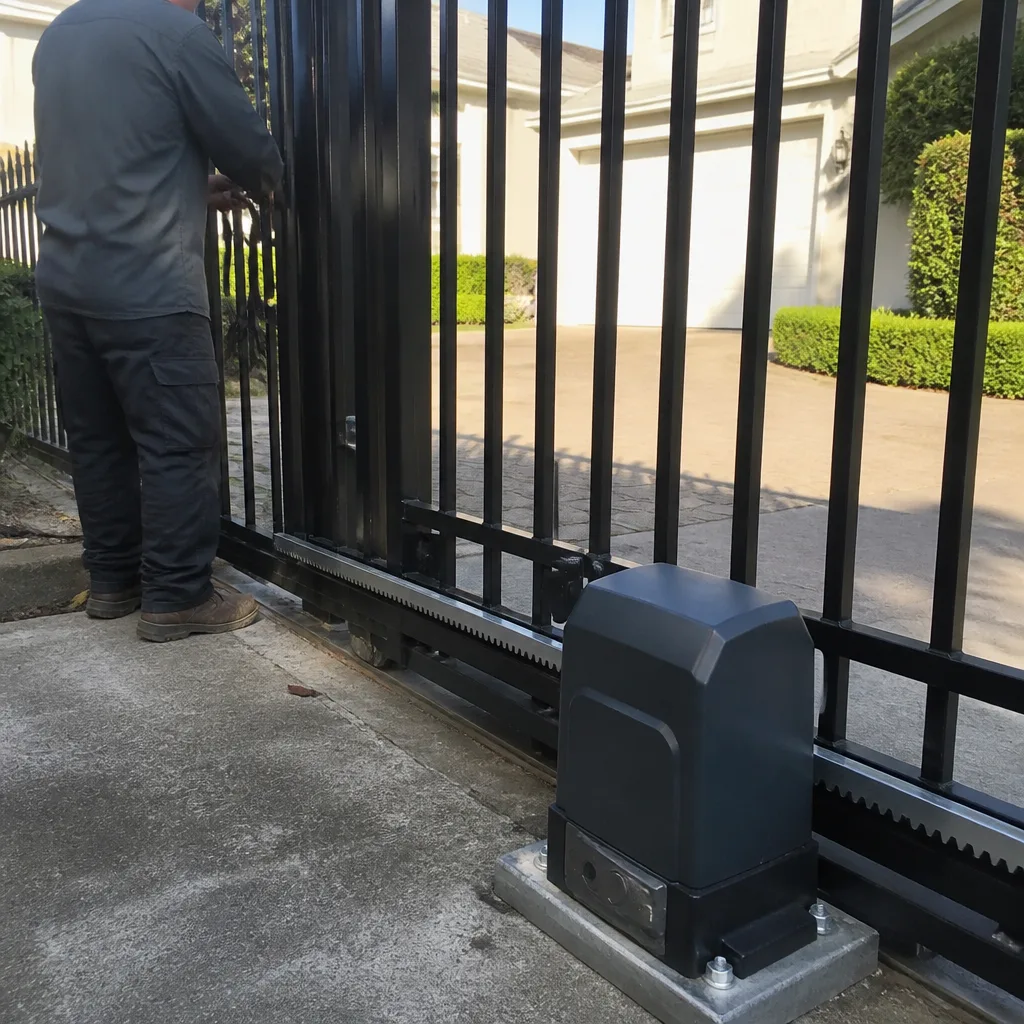 After
After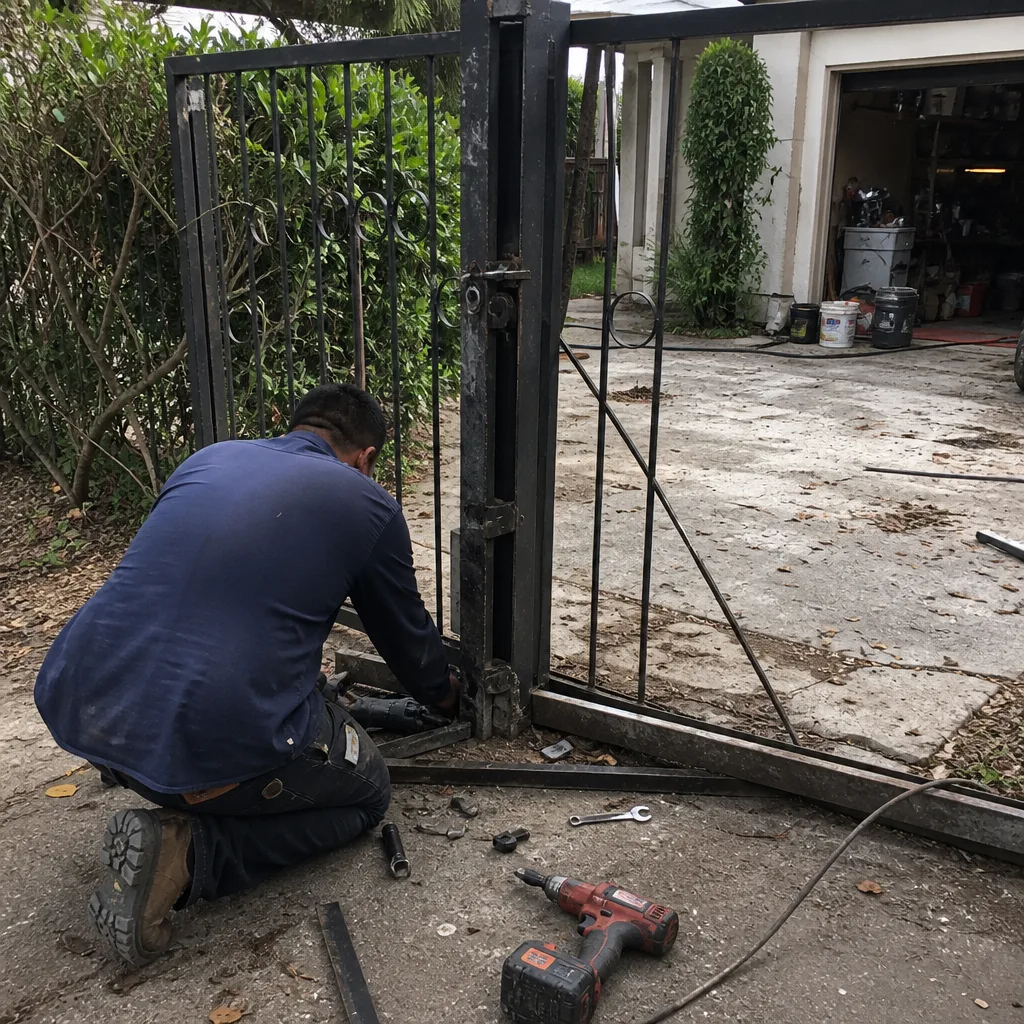 Before
 After
After Before
 After
AfterWhen to Call a Professional
Call a professional when the repair involves stored energy, line voltage, a control board, a safety sensor, a loop detector, or any failure that requires opening the operator housing. Call a professional when the gate has already been partially disassembled by a DIY attempt and the first repair did not solve it. Call a professional when the gate is stuck open and you need it closed tonight. Call a professional when the gate has hit a vehicle or a person, even lightly, because that indicates a safety system failure. Carver Gate Repair Jacksonville offers free estimates in Jacksonville; call (904) 490-8559 and a live person will answer. No voicemail, no call-back queue, no waiting until Monday.
Frequently Asked Questions
Gate repair in Jacksonville typically costs between $180 and $480 for a straightforward mechanical or electrical repair, such as a limit switch replacement, a photo eye alignment, or a hinge adjustment. More involved repairs, including control board replacement, motor replacement, or un-doing a failed DIY attempt, typically range from $500 to $950. Every repair quote should be in writing before work starts. Call (904) 490-8559 for an exact quote on your gate; estimates are free.
For emergency gate repairs in Jacksonville, we dispatch same day when the situation requires it: a gate stuck open, a gate that will not close, or a safety system failure. We are not a subcontracting network; the technician who answers the phone is part of the crew that will show up. Call (904) 490-8559 and describe the problem; a live person will tell you when we can be there.
A full gate motor replacement includes removing the existing operator, installing the new motor, reprogramming the travel limits and obstruction detection settings, integrating the new unit with any existing keypads, remotes, or access control systems, and testing every safety function before the technician leaves. It also includes disposal of the old unit. The price is quoted in writing before any work begins.
Yes. We run the electrical feed from the panel to the operator location, install and wire the safety edges and photo eyes, and test the full circuit before the job is closed. In Jacksonville, the electrical work is performed to code, and we coordinate with the permitting process where the county or city requires it.
Every Carver Gate Repair Jacksonville repair carries a written guarantee for a full 365 days from the date of service. If the repair fails inside that window, we return and fix it at no charge. No argument, no invoice. The guarantee is in writing, and the full-year term is part of the standard job, not an upsell.
In our experience in Jacksonville, the most common gate problem is a false reversal or a gate that refuses to stay closed, usually caused by a dirty or out-of-alignment photo eye, a corroded terminal on the control board, or a loop detector that has drifted out of tune. The second most common is operator failure after a lightning storm, when an induced surge has damaged a component on the board. Both problems are diagnosable in a single visit. Call (904) 490-8559 to schedule a service call.
The Bottom Line
The DIY-versus-professional decision for Jacksonville gate repair comes down to a single question: does this repair involve electricity, stored energy, or a safety system? If the answer is no, you probably can do it yourself with basic tools and the right parts. If the answer is yes, the cost of correcting a failed DIY attempt is higher than the cost of calling a professional the first time. Florida’s liability environment and the contractor-only parts distribution network make this calculation even more one-sided. For the 20% of repairs that are safe to do yourself, use the maintenance routine in this guide and catch problems before they fail. For the other 80%, call a professional who works to the same standard on every job: a written price before work starts, a background-checked technician, and a 365-day written guarantee.
Written by Lonnie Burke, Owner at Carver Gate Repair Jacksonville, serving Jacksonville since 2008.