
Last updated October 16, 2026
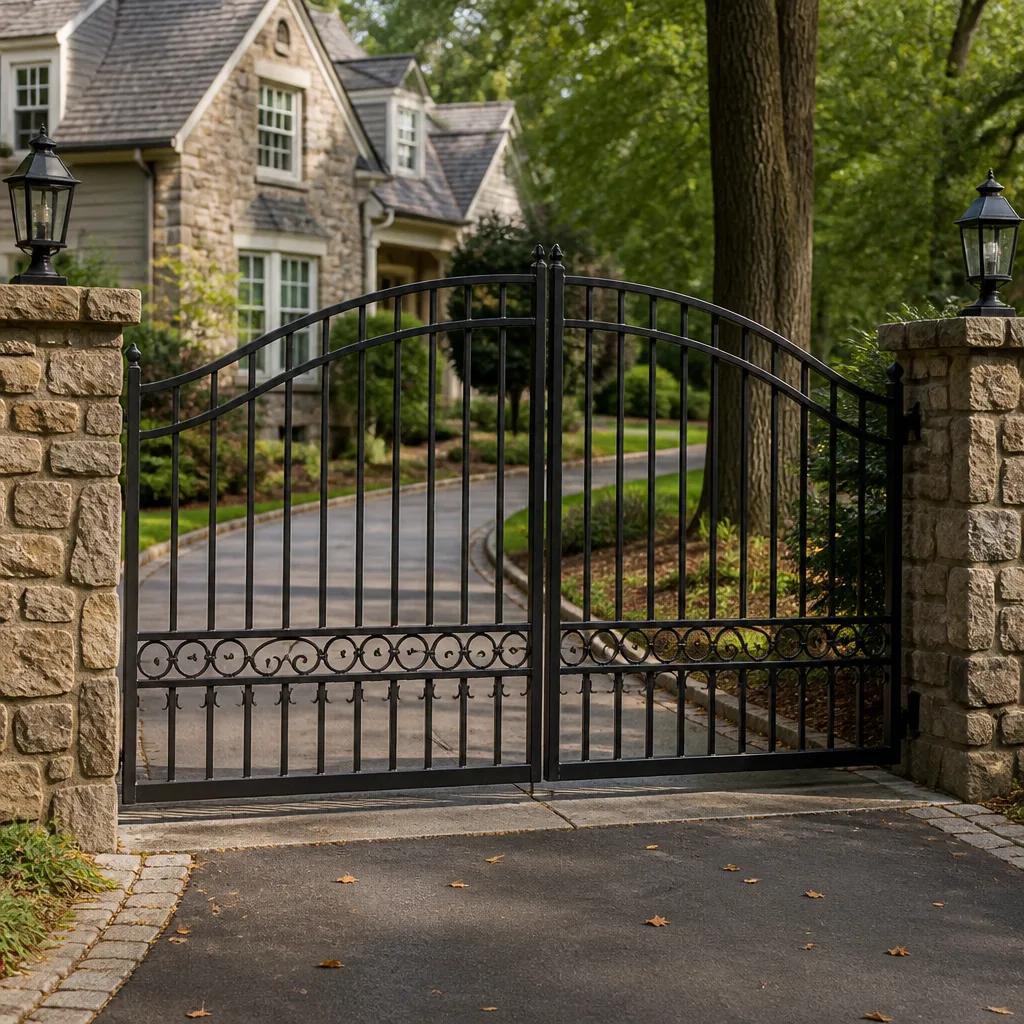 Wrought iron
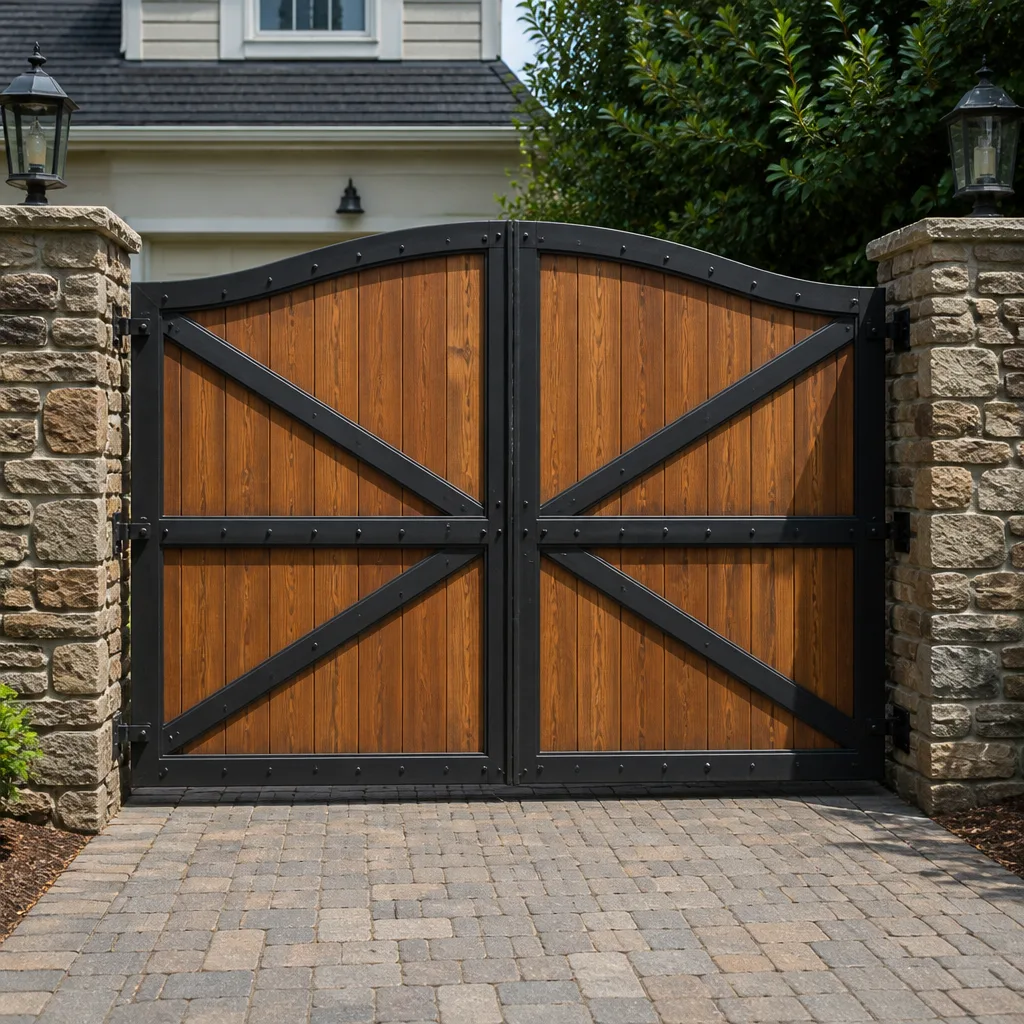 Wood & steel frame
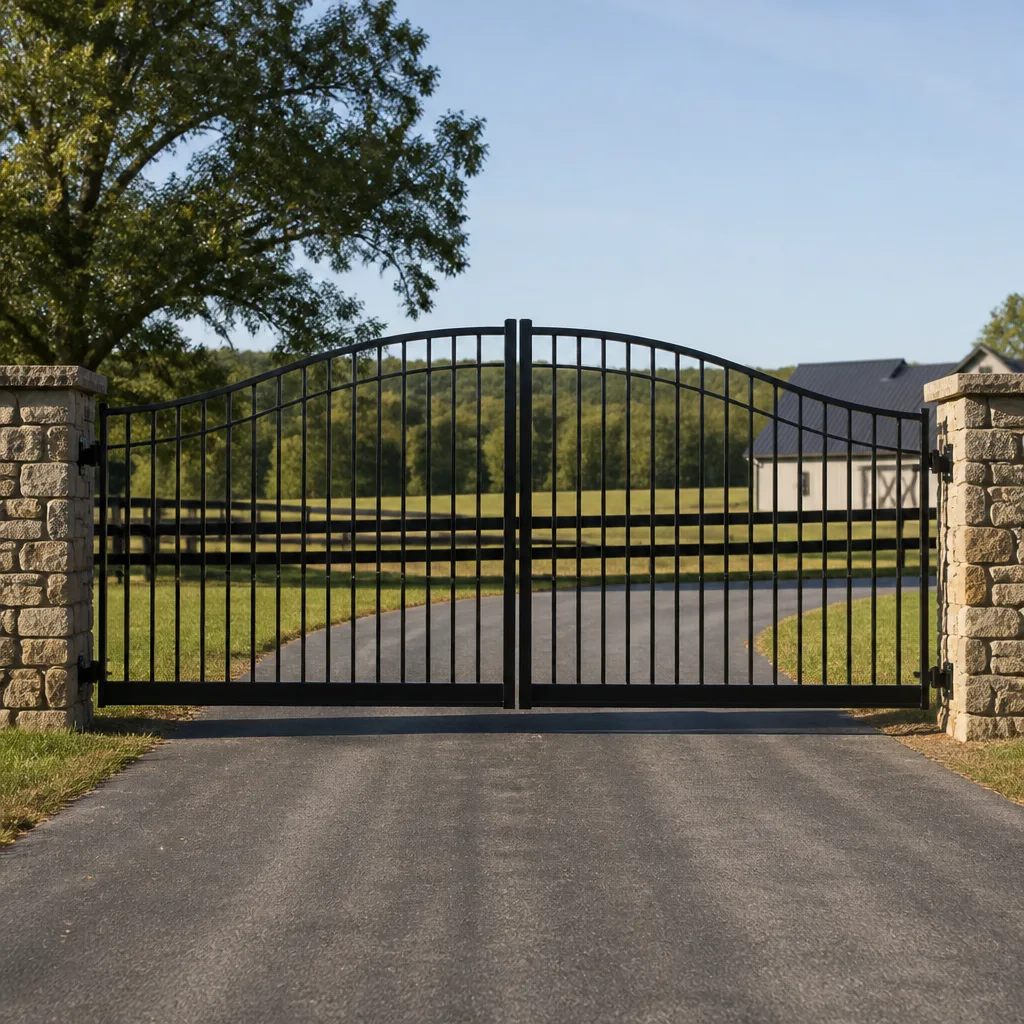 Farm & ranch
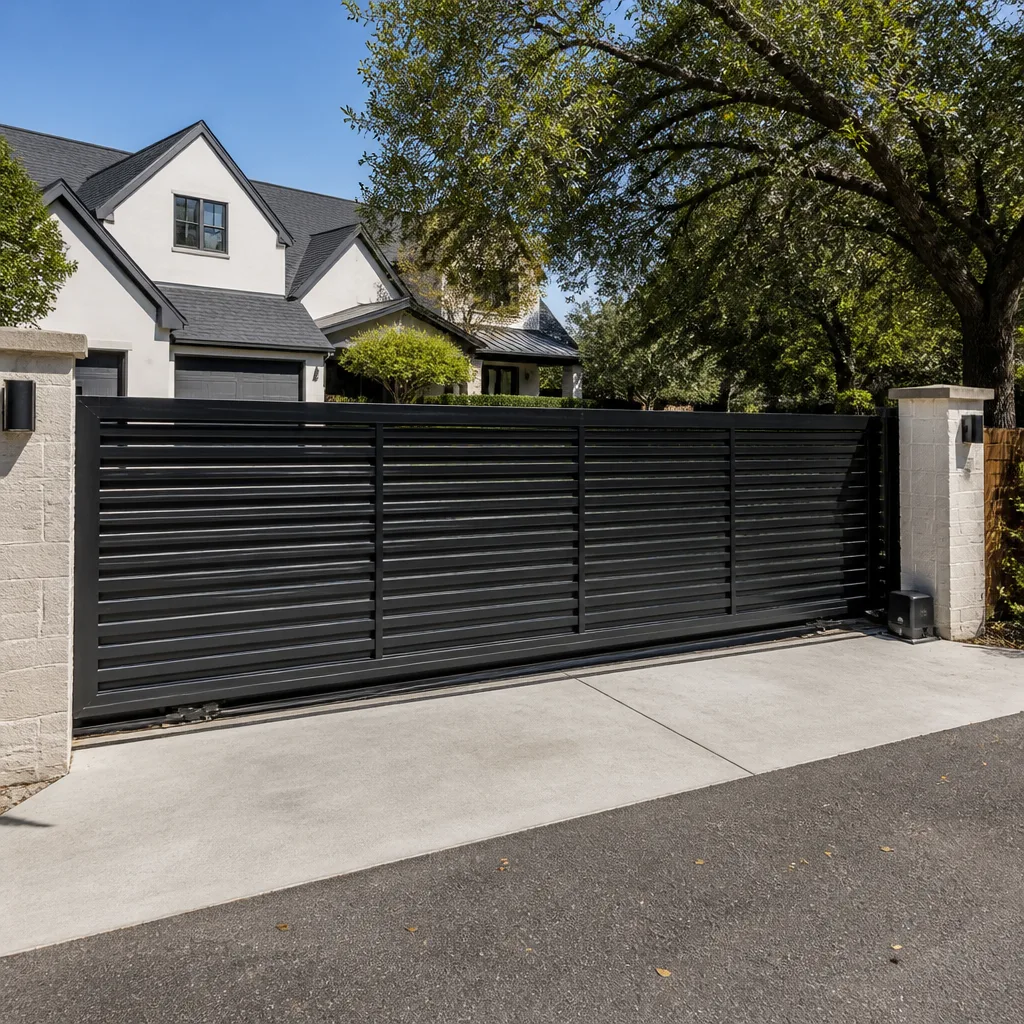 Sliding driveway gates
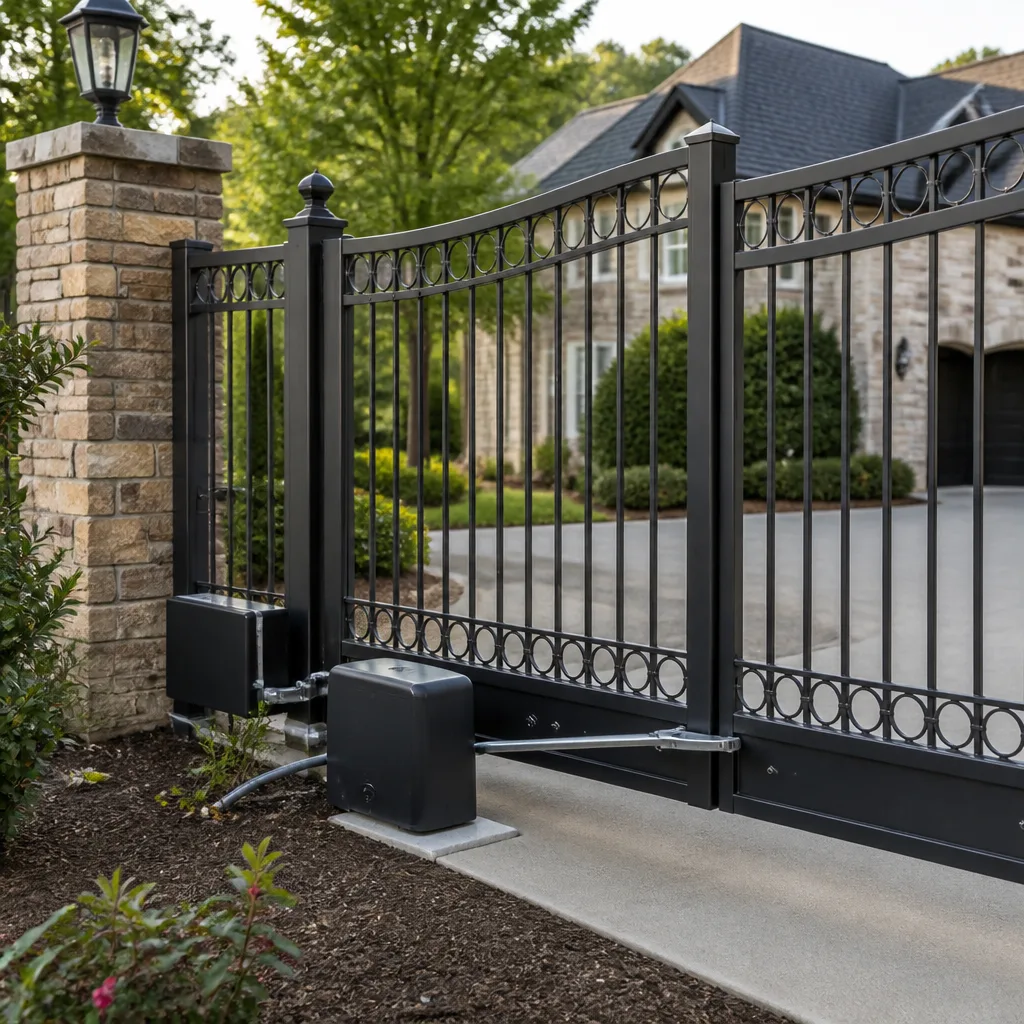 LiftMaster operators
Free on-site gate assessment - hinges, posts, and your LiftMaster or Nice gate operator checked before anything is quoted
The assessment is free and the quote is the invoice.
Get your free estimateGate Repair Warning Signs: A Jacksonville Homeowner’s Reference Guide
A gate that hesitates for two seconds before moving is not warming up. It’s a motor struggling against resistance it shouldn’t be fighting, and that hesitation has a dollar value attached to it that grows every week it’s ignored. Most Jacksonville homeowners catch the obvious problems: the bent hinge, the sagging leaf, the screech loud enough to wake the neighbors. What they miss are the quieter signals, especially the electrical ones, and those are often the difference between a $200 repair and a $1,400 motor replacement. This guide breaks down every warning sign that matters, organizes them by what you can see, hear, and observe, and explains what each one tells you about the Gate Repair bill heading your way.
Quick Answer
The most common gate repair warning signs in Jacksonville fall into three groups: sounds (grinding, clicking, humming, or silence when there should be motion), behavior (hesitation, partial opens, random reversals, or a gate that moves slower than it used to), and visual cues (sag, paint bubbling, joint separation, or corrosion on electrical terminals). For Seasonal Gate Repair Care for Jacksonville: Year-Round Homeowner’s Guide, see our seasonal maintenance breakdown. Grinding means mechanical wear, clicking usually points to a capacitor or relay, humming without movement is often a seized motor or failed start capacitor, and behavioral glitches typically trace to limit switches, control boards, or loop detectors. Any of these is worth a service call; several together mean a component has already begun to fail.
Styles & brands we work with
Table of Contents
- Sound Warning Signs: Grinding, Clicking, Humming, and Silence
- Behavioral Warning Signs: What Your Gate’s Movements Are Telling You
- Visual Warning Signs: Structural and Surface Indicators
- How to Distinguish a Failing Motor from a Failing Control Board
- Jacksonville-Specific Warning Signs: Corrosion Near the Water
- What Warning Signs Cost When Ignored
- A 10-Minute Monthly Inspection Routine
Sound Warning Signs: Grinding, Clicking, Humming, and Silence
Sounds are the easiest diagnostic tool you have, because each one maps to a specific failure mode. The key is listening with the gate fully open, then watching it run through a complete cycle from open to closed and back. What you hear during startup, mid-travel, and shutdown will tell you more than a visual inspection ever will.
Grinding is almost always mechanical contact where there shouldn’t be any. On a sliding gate, grinding signals worn rollers, a chain that’s lost proper tension, or a rack that has shifted out of alignment. On a swing gate, grinding usually points to a hinge bearing that has worn through its lubrication, or an arm on the operator that’s binding against the gate leaf. The repair here is typically straightforward: replace rollers, adjust chain tension, repack or replace hinge bearings. Grinding left unaddressed for six months in Jacksonville’s humidity can wear a roller axle into an oval and turn a $180 repair into a $700 rail replacement.
Clicking is an electrical sound. A rapid click-click-click when the gate tries to open usually means the start capacitor on the motor has failed, or a relay on the control board is cycling without being able to hold. This is common on LiftMaster and DoorKing operators that are more than eight years old; the capacitors degrade with heat, and Jacksonville summers accelerate that degradation. A single solid click followed by nothing is often a limit switch that has failed and is interrupting the circuit. Clicking repairs typically run lower than mechanical repairs, but if the clicking is coming from a relay on the control board, you may be looking at a board replacement rather than a component swap.
Humming without movement is a motor that’s receiving power but cannot turn. In a swing gate, this can be an articulating arm locked into position from a seized joint. In a slide gate, a humming motor with a stationary gate often points to a faulty start capacitor, a jammed gearbox, or a gate that’s physically bound against its track. The danger here is heat: a motor that hums while stalled is drawing full current and building heat fast. A humming motor that isn’t shut off can burn out its windings within minutes, which turns a repair into a replacement.
Silence is its own warning sign, particularly when you press the remote or the keypad and nothing happens. No noise, no movement, no response. This typically eliminates the motor entirely from the equation, if the breaker is on and the outlet has power, you’re most likely looking at the control board, a receiver issue, or a failed transformer. We’ve walked up to more gates that were quiet because a GFCI tripped two days earlier than for any other reason. Check the outlet before calling anyone.
Behavioral Warning Signs: What Your Gate’s Movements Are Telling You
Mechanical and electrical failures both announce themselves through behavior changes, and this is where most homeowners hesitate to act because the gate still technically works. A gate that opens partially and stops, or opens fine on Monday and reverses on Tuesday, is a system that has already entered early failure. The question is which component is failing.
Partial opens. The gate starts moving, travels a foot or two, then stops. If it does this consistently, the limit switch that tells the motor where to stop has either shifted or failed. On most swing operators, these are magnetic or mechanical switches mounted to the operator arm or the gate leaf. The fix is usually an adjustment or a swap, inexpensive and quick. If the partial open is intermittent, the cause may be a sensing loop or safety edge that’s falsely reading an obstruction and sending a stop command. The operator is behaving correctly; it’s receiving bad data.
Random reversals. A gate that reverses mid-cycle as if it hit something, when nothing is there, is often experiencing one of three issues: a misaligned safety edge, a photo eye with condensation on the lens, or a loop detector that’s detecting its own signal reflection. In Jacksonville’s afternoon thunderstorms, a photo eye that’s even slightly out of alignment will fog over and trigger exactly this behavior. Dry it off, realign it, and if the reversal stops, that was the issue. If it continues, you’re looking at a loop detector or a control board logic fault.
Delayed response. Press the remote, nothing for two or three seconds, then the gate moves. This is what the opening hook described. A properly functioning operator responds within half a second. Delay usually means the motor is fighting something: increased friction in the track, a sagging leaf that’s dragging, a gearbox losing its grease. The motor draws more current on startup to overcome the resistance, which shortens its life every single cycle. This is the warning sign with the highest cost-to-address ratio: fix the resistance now and the motor keeps running; ignore it and the motor burns out in a year or two.
Visual Warning Signs: Structural and Surface Indicators
Structural failure announces itself visually long before a gate actually falls or jams. The problem is that most of these indicators are subtle, and they hide in plain sight, especially on darkened iron or aluminum that’s been in place for a decade.
Paint bubbling on an iron gate is corrosion beginning underneath the coating. This is not a cosmetic issue. Water has found a path through the paint and is oxidizing the steel beneath. In Jacksonville, where summer humidity regularly exceeds 90 percent and salt air travels inland from the Atlantic, paint bubbling appears faster than it does in drier climates. What you’re seeing is the leading edge of structural compromise: once the steel underneath loses its protective layer, pitting begins, and pitting in a hinge or weld joint is how a gate leaf detaches. Wire-brush the area, treat the oxidation, repaint, and if the bubbling is widespread, have a professional assess whether the gate’s structural members are still full-thickness.
Joint separation is the most serious visual signal. On a wrought-iron or aluminum gate built as a welded or riveted assembly, the joints where pickets meet rails are load-bearing. When a joint starts to show a visible gap, or when a rivet head looks raised rather than flush, the gate has already begun to fatigue. A gate leaf hanging from one compromised corner joint shifts its entire weight distribution to the remaining joints, which accelerates their failure. This is a structural repair, not a touch-up, and it often requires re-squaring the leaf and re-welding or re-riveting before the geometry is too far gone to save.
Sag at the latch edge on a swing gate is visible when the leaf no longer lines up with the latch post at the same height. The leaf may clear the ground by six inches at the hinge side and only three inches at the latch side. That sag means the hinge bearings, the post, or the leaf framing itself has yielded. The longer the sag persists, the further the gate drops, until the latch no longer engages or the leaf scrapes the driveway. The repair path depends on what actually yielded: if the post has shifted, the fix is resetting it in concrete. If the hinges have worn, it’s bearing replacement. Ignoring the sag transfers the load into places that were never designed to carry it.
How to Distinguish a Failing Motor from a Failing Control Board
This is the single most useful diagnostic skill a Jacksonville homeowner can develop, because the cost difference is large. A motor replacement on a typical residential swing or slide gate runs in the range of $600 to $1,400 depending on brand and horsepower. A control board replacement usually runs $300 to $700. Misdiagnosing one as the other can cost you real money.
Here’s the field method, and it works without opening the housing on most systems:
- Listen at startup. If the motor hums, clicks, or makes any noise at all when the gate is commanded to move, the control board has successfully sent the command and the motor received it. The problem is downstream: the motor, the capacitor, or the mechanical load. A completely silent system, provided power is confirmed at the outlet, points to the control board or the transformer.
- Watch the gate’s response pattern. A motor that’s failing usually fails consistently: it struggles on every cycle, or it works cold and fails hot. A control board that’s failing behaves erratically: the gate opens when you never pressed anything, or the system forgets its programming, or the auto-close feature stops working while manual operation remains normal.
- Check what resets fix. A failing motor rarely responds permanently to a power cycle. A failing control board often does: kill power for sixty seconds, restore it, and if the system behaves normally for a day or a week before glitching again, the board is the likely culprit. This intermittent behavior is the board’s electronics degrading.
- Consider age and heat exposure. Motors on well-maintained gates routinely last 10 to 15 years. Control boards in Jacksonville frequently fail at half that age because the components degrade in sustained heat and humidity. If your operator is eight years old and you’ve never replaced a board, the odds favor the board.
If you’re not sure, a qualified technician can bench-test the motor separately from the board and give you a definitive answer before any parts are ordered. For a more complete write-up on motor-specific issues, see our gate motor repair in Jacksonville page.
Jacksonville-Specific Warning Signs: Corrosion Near the Water
Jacksonville is a coastal city with river and Intracoastal exposure running through it, and properties in neighborhoods like Ortega, San Marco, Atlantic Beach, and Mandarin deal with salt-laden air that accelerates what electricians call terminal corrosion. This is a distinct failure mode from general rust, and it targets the electrical connections rather than the metal structure.
Corrosion on electrical terminals appears as a white, green, or blue-green powdery buildup where wires connect to the control board, the limit switches, the battery backup, or the loop detector. In electronics, this buildup is essentially a resistor growing across your connection. It increases resistance, which generates heat, which accelerates further corrosion. The system may work fine for months while the resistance builds, then fail intermittently as the connection degrades past a usable threshold.
The warning signs specific to terminal corrosion include: a gate that works from the keypad but not the remote, or vice versa, where each signal path uses a different terminal block; a system that fails after heavy rain or a humid stretch then returns to normal as the connection dries; and visible green-white powder at any exposed connection point. If you can see it, the repair window is already open.
The fix is more than spraying contact cleaner. The affected terminals need to be cleaned, the wire ends trimmed back to clean copper, and the connectors replaced if the corrosion has eaten into the metal. In persistent cases near the water, a technician may apply dielectric grease or upgrade to corrosion-resistant terminal blocks. This is preventive work that extends the life of a board that Jacksonville’s climate would otherwise claim in five years instead of ten.
What Warning Signs Cost When Ignored
Warning signs are cheap to fix and expensive to ignore. The math is consistent across every gate we’ve ever worked on in Jacksonville. Here’s what the progression looks like:
- Grinding roller: $120 to $180 to replace the roller. Ignored: $500 to $800 to replace a scored rail section.
- Clicking capacitor: $150 to $250 to replace the capacitor. Ignored: $600 to $900 for a motor that kept trying to start against a dead capacitor and burned its windings.
- Hesitant response: Often resolved with track cleaning and adjustement for $100 to $200. Ignored: $700 to $1,300 motor replacement when the constant overcurrent finally kills it.
- Paint bubbling: $100 to $250 to treat and repaint. Ignored: $800 to $2,500 for structural repair or gate replacement once the steel has thinned past a safe point.
- Terminal corrosion: $80 to $180 for cleaning, wire end trimming, and connector replacement. Ignored: $400 to $700 for a control board that failed from the heat of increased resistance.
These are Jacksonville market ranges, and they assume a professional doing the work correctly the first time. The pattern holds across every brand: the earlier you respond, the less you pay, often by a factor of three or more. That’s the argument for the monthly inspection routine below, and it’s the argument for not rationalizing a new sound as the gate being old. Old gates don’t grind; worn components grind.
A 10-Minute Monthly Inspection Routine
Most of what we find on service calls in Jacksonville was visible to the homeowner months earlier. A short monthly pass catches warning signs before they become failures. Here’s the routine:
- Listen through a full cycle. Open the gate, close it, and listen at startup, mid-travel, and shutdown. Any grinding, clicking, humming, or new sound you didn’t notice last month is a finding. Write it down or note it in your phone.
- Watch the gate for sag or hesitation. Does it start moving within half a second of the command? Does it sit level at the latch? Does it move smoothly or jerk?
- Inspect the hinges, bolts, and weld points. Look for paint bubbling, visible rust staining, joint gaps, or raised rivet heads. Pay attention to the bottom rail where water sits.
- Check the electrical connections that are visible. If you can see the control board without removing panels, look for white or green corrosion on the terminals. Check for spider webs or dirt buildup inside the housing, both of which attract moisture in Jacksonville’s humidity.
- Test the safety features. Block the photo eye with your hand while the gate is closing. If the gate doesn’t reverse, stop using it and call a technician. A non-functional safety edge or photo eye is a liability and a code issue.
- Clear the track and the swing path. For slide gates, remove debris, leaves, and dirt from the rail. For swing gates, trim anything that’s grown into the path. Resistance from debris causes exactly the hesitation and motor stress described earlier.
If the inspection turns up anything you’re not sure about, take a short video with your phone of the sound or behavior. This helps any technician diagnose faster, and it creates a record so you can track whether the symptom is getting worse month to month.
Common Mistakes to Avoid
- Lubricating without cleaning first. Spraying grease over dirt and old lubricant locks abrasive particles into the bearing, which accelerates wear. Clean the surface, then apply a light lubricant rated for gate hardware.
- Ignoring a hesitation because the gate still opens. The hesitation is the motor telling you it’s working too hard. The clock is running on the windings every time it cycles.
- Assuming a quiet gate means a healthy gate. Silence only rules out one failure mode. Corrosion, limit switch drift, and control board degradation all progress quietly until the day they don’t.
- Replacing batteries before checking the outlet. A surprising number of remote control problems are a tripped GFCI or a dead outlet. Always check power first.
- Painting over bubbling paint without treating the oxidation. Painting seals the moisture in and accelerates the corrosion. The rust must be addressed before the topcoat goes on.
- Delaying a call because the gate is old. Age is not a warning sign. Specific sounds, behaviors, and visual cues are. A well-maintained 20-year-old Mighty Mule or Elite operator can outlast a neglected 5-year-old unit.
- Trying to bypass a safety edge rather than replace it. The safety edge exists for a reason, and the reason is protecting people, pets, and vehicles. A jumped safety edge is a serious injury waiting for the wrong day.
See the difference
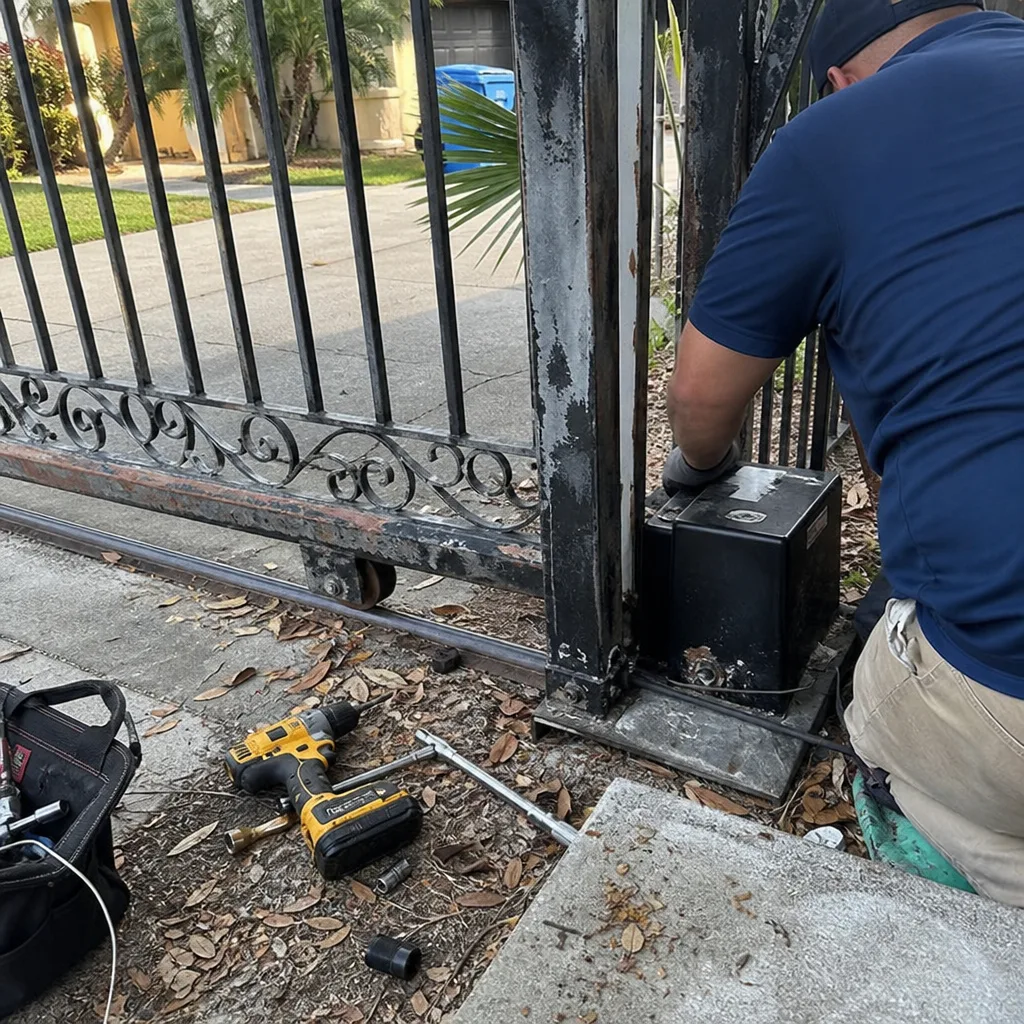 Before
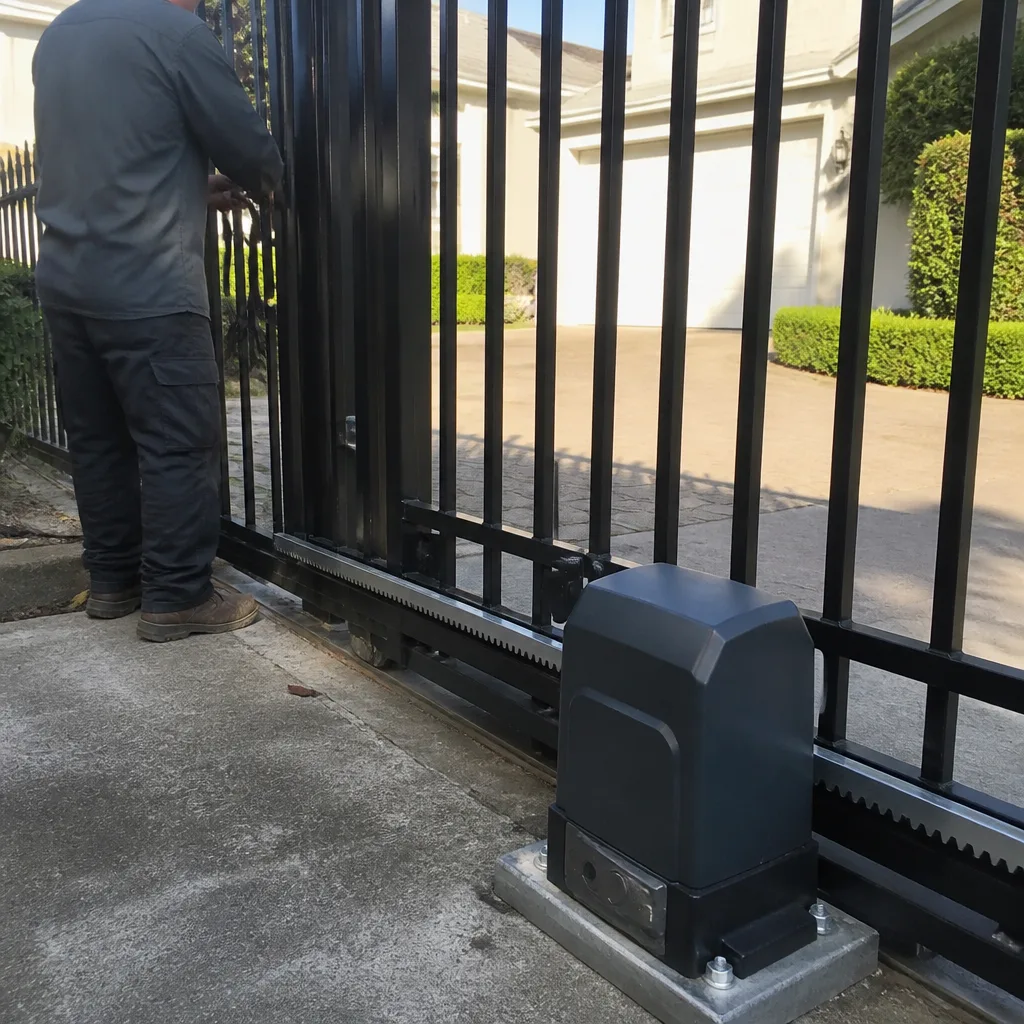 After
After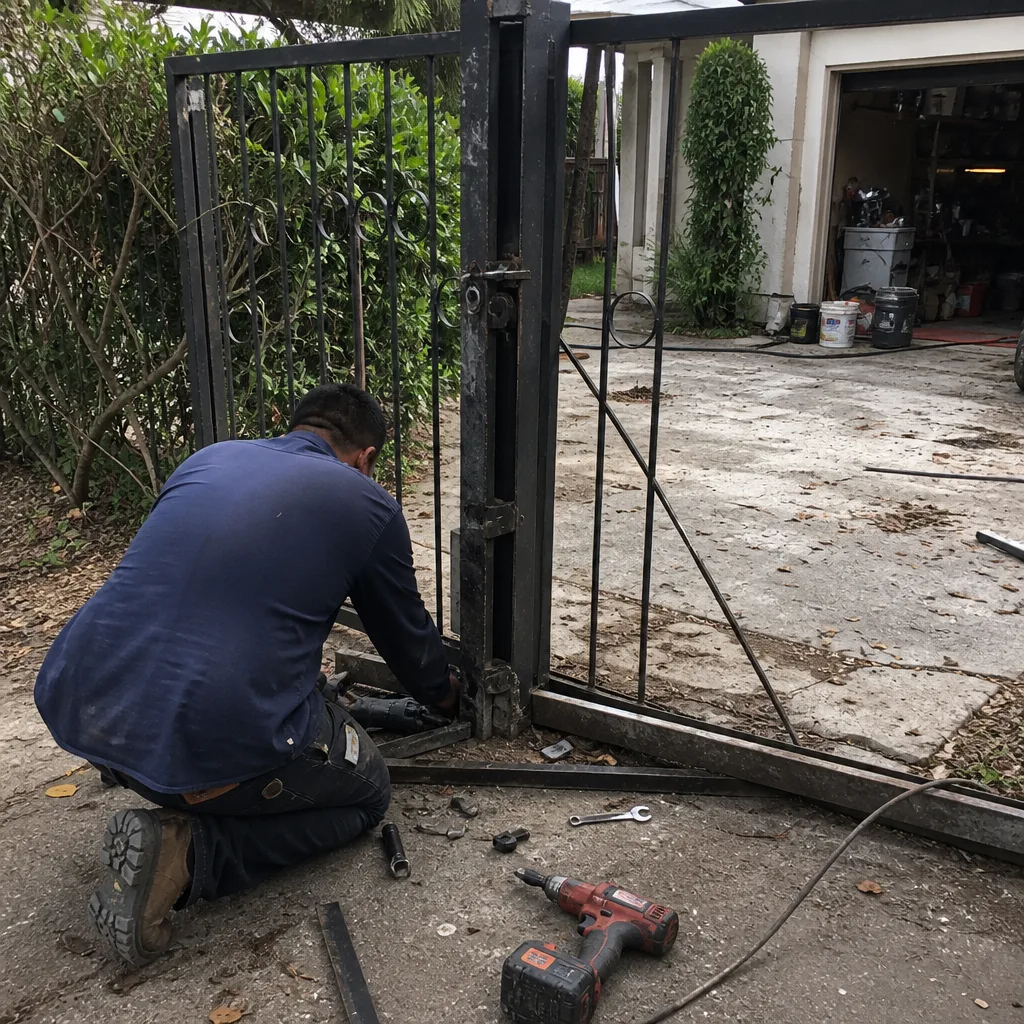 Before
 After
After Before
 After
AfterWhen to Call a Professional
Call a professional when the warning sign points to a load-bearing or safety-critical component: joint separation, sag in the leaf, a non-functional photo eye or safety edge, or any electrical symptom you can’t trace to an outlet or battery. Also call when the same symptom has recurred after a DIY fix; that recurrence usually means the underlying cause was never addressed. A grinding roller replaced without checking the track alignment will grind again. If you’re unsure whether a symptom is serious, err on the side of a service call. For help choosing a provider, read How to Hire a Gate Repair Contractor in Jacksonville: A Step-by-Step Guide. Carver Gate Repair Jacksonville offers free estimates in Jacksonville, and you’ll get a written price before any work starts. Call (904) 490-8559 and a real person answers, any time of the day or night.
If a gate leaf is detached, hanging from its hinges, or the motor is humming while stalled, do not attempt to lift or force the gate yourself. Gate leaves weigh hundreds of pounds, and a stalled motor is drawing current and building heat. Shut off the breaker and wait for a trained technician.
Frequently Asked Questions
In our experience across Jacksonville, the most common single issue is a failed or drifted limit switch, which stops the gate at the wrong point or sends a stop command mid-travel. Close behind it are worn rollers on slide gates and failed start capacitors on swing operators. The common thread is that all three announce themselves early with the sounds and behaviors described above.
Residential gate repair in Jacksonville typically runs between $150 and $450 for component-level fixes (rollers, limit switches, capacitors, photo eyes), between $300 and $700 for control board replacement, and between $600 and $1,400 for a full motor replacement depending on brand and horsepower. Every Carver Gate Repair Jacksonville job comes with a written price before work starts, so the number you see is the number you pay. Estimates are free: call (904) 490-8559 for an exact quote.
Carver Gate Repair Jacksonville dispatches background-checked, uniformed technicians across Jacksonville, and many repair jobs are completed on the first visit because the common parts (capacitors, limit switches, rollers, photo eyes) travel in the service vehicle. Larger repairs that need an ordered part will be scheduled at the first visit with a written price and an arrival window. Call (904) 490-8559 and a live person answers 24/7, including weekends and holidays.
A gate that hesitates before moving is usually a motor fighting increased resistance, which comes from debris in the track, worn rollers, a sagging leaf, a gearbox low on lubrication, or a failing start capacitor. The motor draws higher current during that hesitation, which generates heat and shortens its life. Addressing the hesitation early is one of the cheapest repairs we do; ignoring it is one of the most expensive to come back from.
Yes, and Jacksonville properties near the river, the Intracoastal, and the beaches see it consistently. Salt-laden humid air corrodes electrical terminals, which increases resistance and generates heat. The result is intermittent failures that come and go with the weather, then become permanent when the connection degrades past the point of function. Visible green or white powder at terminals is the warning sign to act on.
Every repair from Carver Gate Repair Jacksonville carries the 365-Day Done Right Promise, which is a written guarantee covering the work for a full year from the date of service. If the repair fails inside that window, we return and make it right at no charge. No argument, no pro-rated warranty, no service call fee. That guarantee is the whole point of how this company operates, and it’s the reason every repair starts with a written price.
The Bottom Line
Gate warning signs divide into mechanical signals you can see and hear, and electrical signals that show up as behavior changes. Grinding means wear, clicking means electrical stress, hesitation means resistance, and random reversals mean bad data from a sensor. Each has a dollar value that grows the longer it’s ignored. Jacksonville’s climate accelerates the corrosion-related failures, which makes the monthly inspection routine above more important here than it would be inland. If you find something and you’re not certain what it means, a call to Gate Repair in Jacksonville costs nothing. The phone number is (904) 490-8559, and a live person answers. That’s the standard this company was built on, and it’s the standard that keeps your gate running.
For homeowners considering a new gate rather than another repair, see our gate installation in Jacksonville page for what a full project involves. If you’re dealing with an intermittent motor issue, the gate motor repair in Jacksonville page goes deeper into diagnosis. And if you’re new to this site, start at the Carver Gate Repair Jacksonville home page for an overview of everything we do.
Written by Lonnie Burke, Owner at Carver Gate Repair Jacksonville, serving Jacksonville since 2008. Browse more guides & resources for homeowners.