
Last updated October 16, 2026
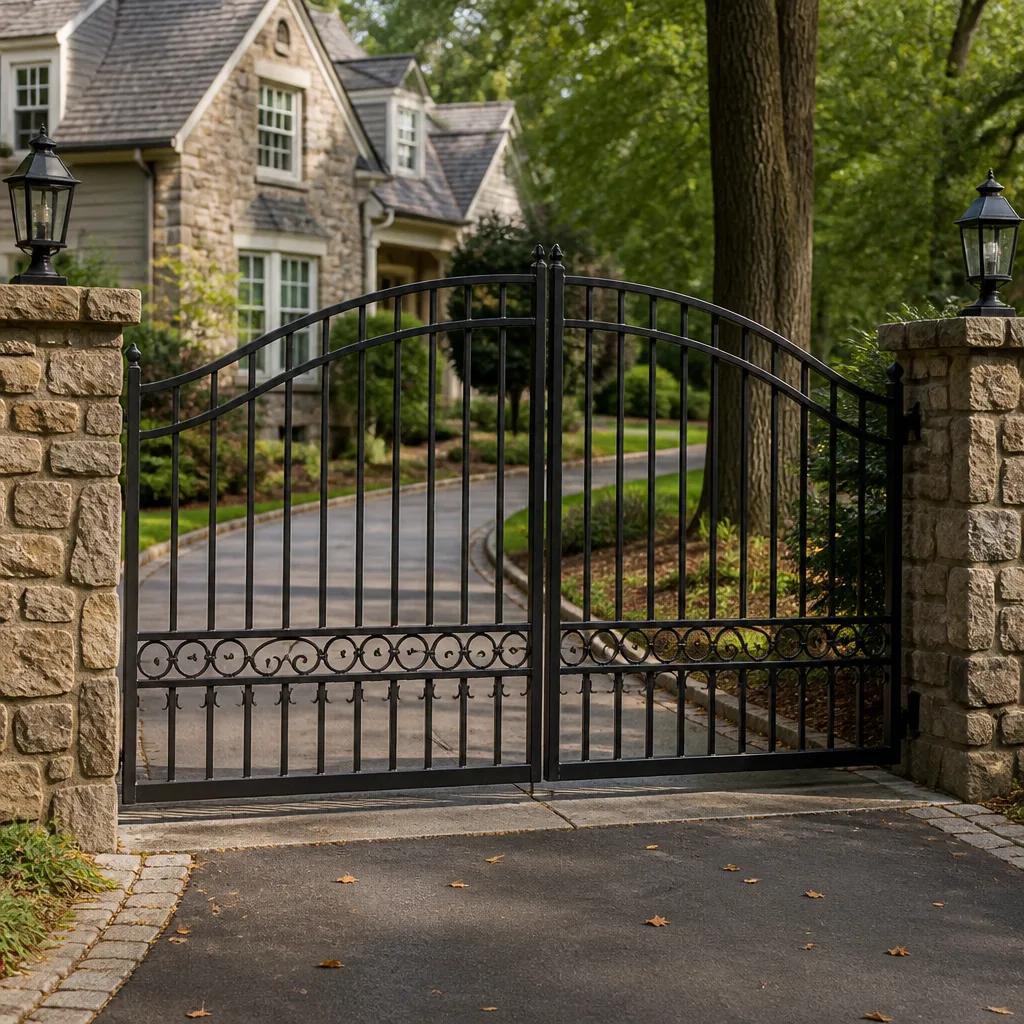 Wrought iron
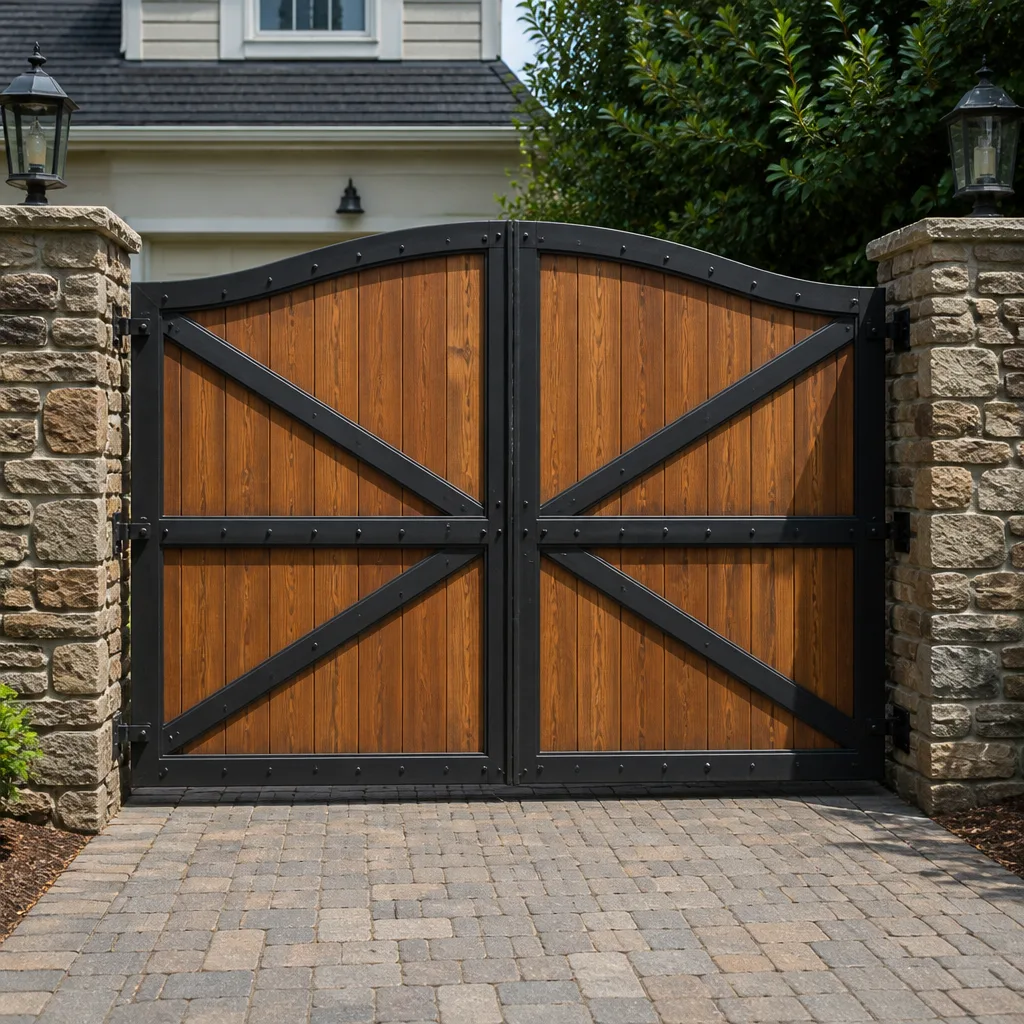 Wood & steel frame
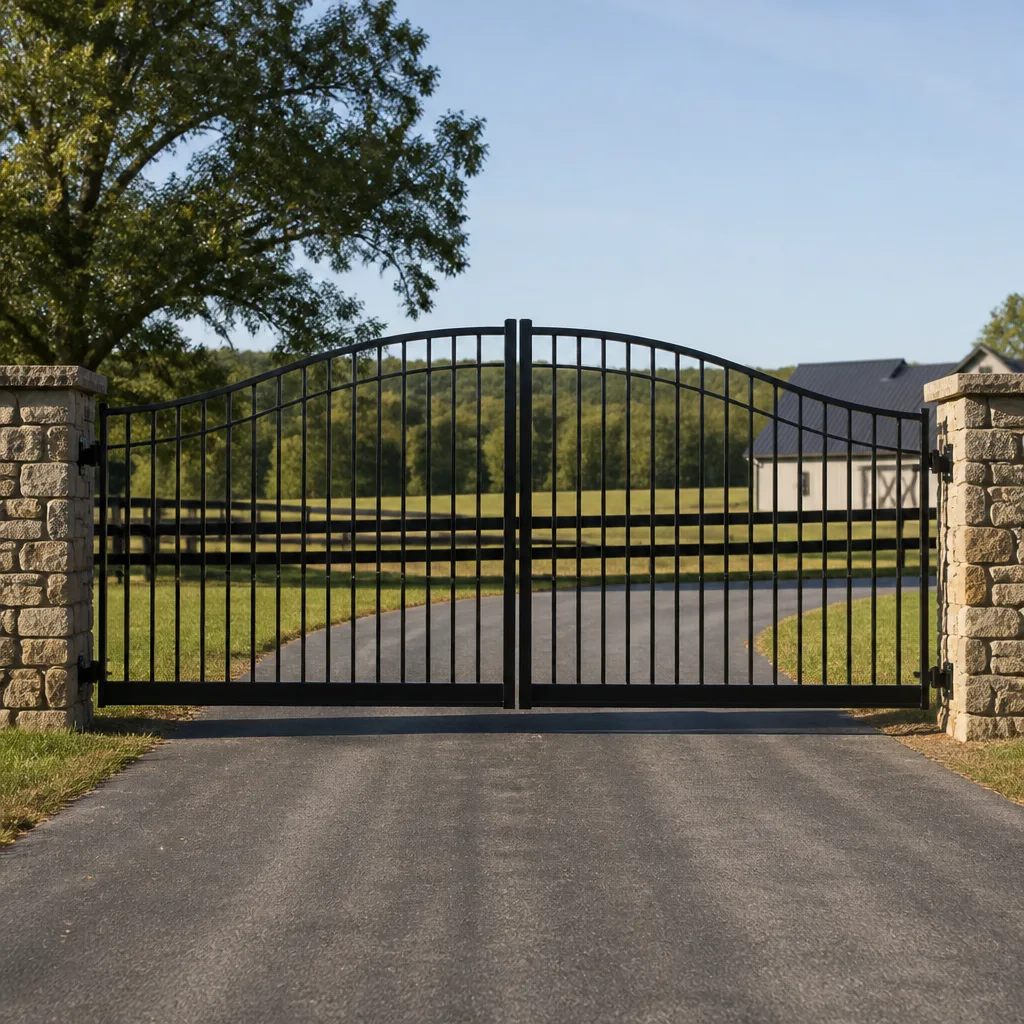 Farm & ranch
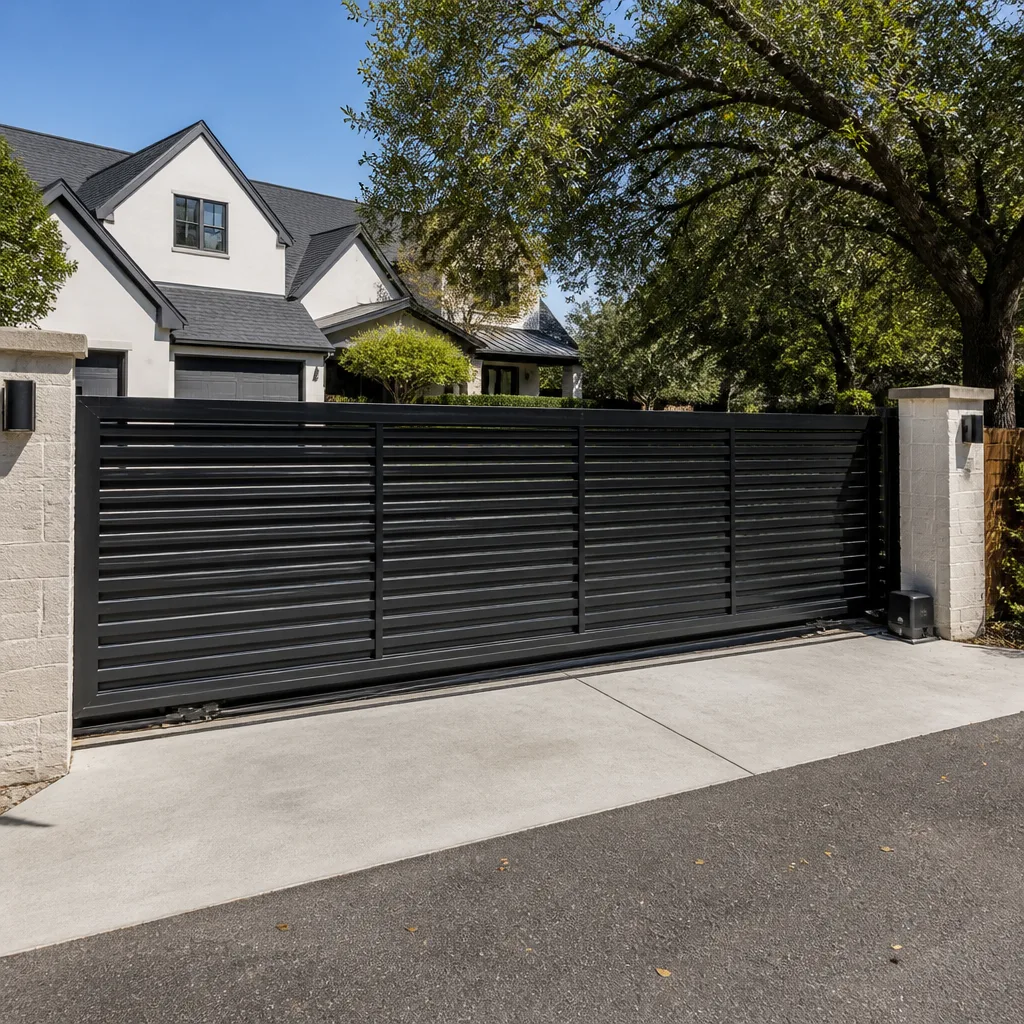 Sliding driveway gates
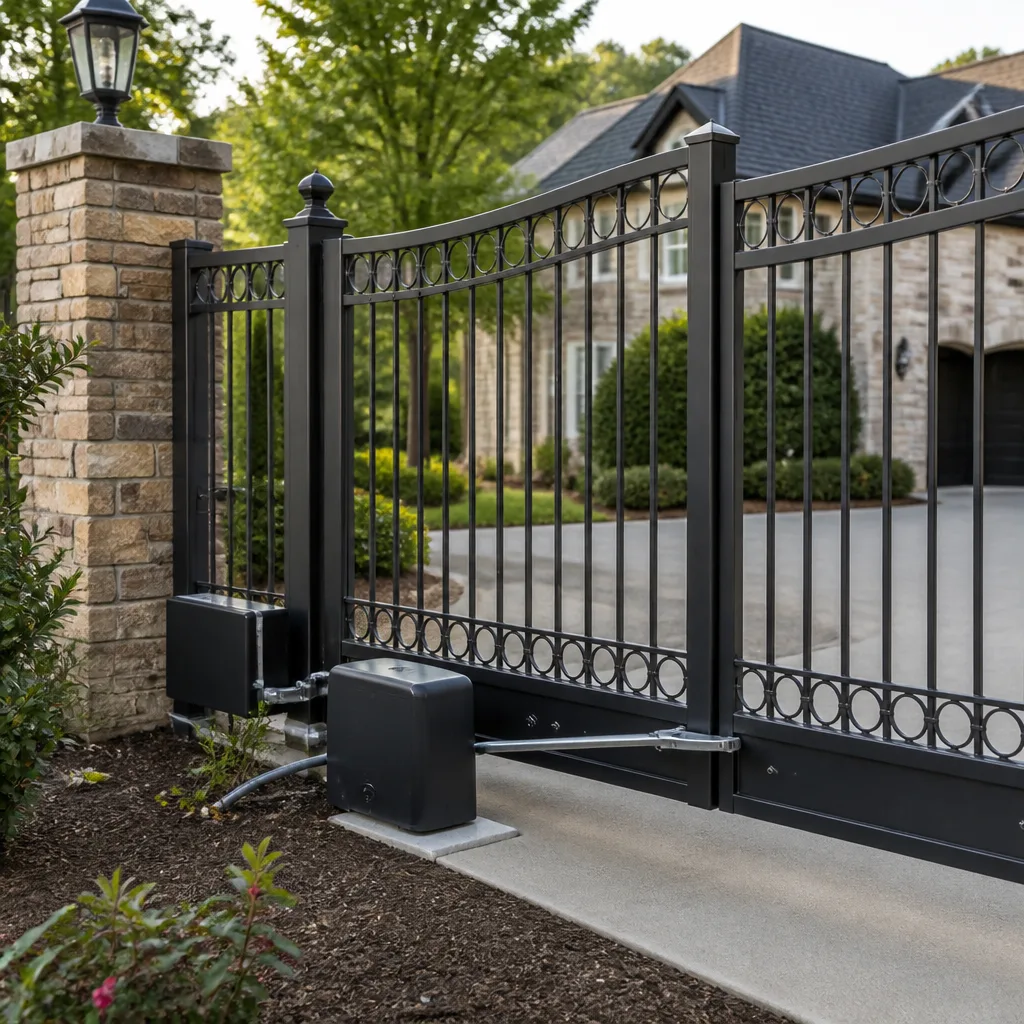 LiftMaster operators
Free on-site gate assessment - hinges, posts, and your LiftMaster or Nice gate operator checked before anything is quoted
The assessment is free and the quote is the invoice.
Get your free estimateSeasonal Gate Repair Care for Jacksonville: Year-Round Homeowner’s Guide
Most seasonal gate guides divide the year into spring, summer, fall, and winter. Jacksonville gates don’t fail on that schedule. They fail in September after storm surge, in July after two months of 95-degree heat, and in February when a cold snap contracts metal that’s been sitting in 90-degree equilibrium for months. This guide is built on what we actually see in Jacksonville Gate Repair services calls, season by season. You’ll learn what to check before hurricane season, what to inspect after a storm passes, how summer heat affects motor duty cycles, what winter does to hydraulic openers and batteries, and how to track gate condition year over year so a developing failure gets caught before it strands you outside your own driveway.
Styles & brands we work with
Quick Answer
Seasonal gate maintenance in Jacksonville means timing your inspections around four distinct stress periods: pre-hurricane season (May), post-storm recovery (September through October), the summer heat stretch (June through August), and the brief cold season (December through February). At minimum, inspect gate anchors, motor duty cycles, battery backups, and limit switches before each seasonal shift. A homeowner who documents condition changes quarterly will catch most gate failures a full season before they happen.
Table of Contents
- How Jacksonville’s Climate Actually Stresses Gates
- Pre-Hurricane Season Checklist: May Assessment Protocol
- Post-Storm Inspection: What to Check After a Named Storm or Flooding
- Summer Heat Cycling: Motor Duty Cycles and Thermal Stress
- Winter Prep: Cold Snaps, Hydraulic Openers, and Battery Backup
- Documenting Seasonal Condition Changes Year Over Year
- Common Mistakes to Avoid
- When to Call a Professional
- Frequently Asked Questions
- The Bottom Line
How Jacksonville’s Climate Actually Stresses Gates
Jacksonville sits in USDA hardiness zone 9a, but for gate hardware, the relevant numbers are humidity, salt exposure, and temperature swing. The city averages roughly 50 inches of rain per year, most of it falling between June and September. Relative humidity stays above 80% for long stretches. Salt air from the Atlantic and the St. Johns River carries inland for miles, accelerating corrosion on steel gate frames, hinge pins, and motor housings in neighborhoods from Riverside to San Marco to Arlington.
The temperature story matters more than most homeowners realize. Jacksonville swings from a January average low around 45°F to a July average high around 91°F, but the surface temperature of a black steel gate sitting in direct sun can reach 140°F or more. That thermal expansion and contraction cycle, repeated day after day for months, works bolts loose, fatigues welds, and shifts gate alignment fractions of an inch at a time. None of it fails at once. All of it compounds.
What makes Jacksonville unusual is the combination: high heat, high humidity, salt exposure, and a six-month hurricane window that runs from June through November. A gate that survived three mild winters in Atlanta will behave differently after one Jacksonville summer. We’ve replaced motors that were only two years old because the owner never accounted for how hard the August heat pushes a motor’s duty cycle. The climate here doesn’t just wear gates down. It wears them down on a schedule, and that schedule is predictable if you know what to watch for.
Pre-Hurricane Season Checklist: May Assessment Protocol
The first week of May is the right time to run a full gate assessment in Jacksonville, as outlined in The Complete Guide to Gate Repair in Jacksonville. Hurricane season officially starts June 1, and by mid-May you still have time to schedule repairs, order parts, and get everything tightened before the first named storm enters the Atlantic. Waiting until a storm is three days out means waiting in line behind every other homeowner with the same problem.
Storm loads on a gate are different from everyday loads. A 60 mph wind gust against a solid gate panel applies hundreds of pounds of lateral force. The gate’s anchors, hinges, and operator mounting brackets are the first points of failure. Here is the assessment order we use on every pre-season service call in Jacksonville:
- Anchor integrity check. Gate posts should sit plumb in their concrete footings with no visible cracking around the base. A post that leans even two degrees under hand pressure will move further under storm wind. Check for rust staining at the base of each post, where water tends to pool after Jacksonville afternoon thunderstorms.
- Hinge and pivot inspection. Swing gates carry all their weight on two or three hinge points. Look for elongated bolt holes, worn bushings, or sag at the latch side. A gate that drags on the ground before a storm will jam completely after the ground gets saturated.
- Operator mounting bracket torque. The bolts that hold a gate operator to its post or pad should be checked with a wrench, not just visually. Vibration from daily cycles loosens them over time. In Jacksonville’s humidity, a loose bolt means water gets behind the bracket and accelerates corrosion.
- Wiring and connection review. Open the operator cover and look for corrosion on terminals, frayed wire insulation, or ants. Fire ants love gate operator enclosures in Jacksonville, and a nest inside a control board can short out the entire system.
- Manual release verification. If the power goes out during a storm, you need to be able to open the gate by hand. Test the manual release now, not in the dark with 50 mph winds outside. A release mechanism that hasn’t been used in years will often seize up exactly when you need it.
- Battery backup test. Disconnect power to the operator and cycle the gate on battery. If the battery fails, replace it before the storm window opens. A battery that’s three years old in Jacksonville’s heat is usually at the end of its useful life.
This is also the time to schedule any Gate Repair in Jacksonville work that’s been on the list. A worn hinge that’s annoying in April becomes an emergency in September. Most of the pre-season repairs we handle in Jacksonville are ones the homeowner knew about for months and finally scheduled when the first storm formed in the Atlantic.
Post-Storm Inspection: What to Check After a Named Storm or Flooding
After a named storm or a serious flooding event passes through Jacksonville, the instinct is to check the house first. That’s correct. But the gate needs attention within 24 to 48 hours, because storm damage compounds fast in this climate. A bent gate frame sits in 85% humidity and starts rusting at the stress points. A flooded operator holds water inside the housing and corrodes the control board from the inside out. The sooner you assess, the more you can save.
Here is the post-storm inspection sequence we recommend for Jacksonville homeowners:
- Visual frame inspection. Walk the gate slowly and look for new bends, twists, or stress marks at welds and corners. Tree limbs and wind-driven debris bend gate frames. If the gate still moves, open and close it once and watch for binding at any point in the travel.
- Operator sound check. A motor that runs louder after a storm, or makes a grinding noise, may have taken on water or debris. If the operator was submerged even partially, cut power at the breaker before opening the cover. Water inside an energized operator is a shock hazard.
- Wiring inspection. Check for exposed wiring where tree branches or debris may have pulled conduit loose. Look for moisture inside the operator housing. Replace the desiccant pack if one is fitted. In Jacksonville’s humidity, a sealed operator with a saturated desiccant will fog its own control board within weeks.
- Limit switch and travel check. Storms knock gates out of alignment, and a misaligned gate trips limit switches or slams at the end of travel. Watch the gate run a full cycle in both directions. If it overtravels or reverses unexpectedly, the limits need recalibrating.
- Anchor and footing review. Wind loads can crack concrete footings or pull anchor bolts loose. If the post moves at all under firm hand pressure, don’t run the gate. Call for a structural assessment before the operator gets damaged fighting a compromised anchor.
Flooding deserves special mention. Saltwater or brackish storm surge is far more corrosive than rain. If your gate operator was touched by floodwater, even briefly, cut power and have the internals inspected. A control board that got wet may work for a week and then short out. Four of the five motor brands we service most often in Jacksonville, FAAC, BFT, Linear, and Viking, use enclosed control boards that trap moisture once water gets past the housing gasket. A post-flood inspection now is cheaper than a full motor replacement in November. Our Gate Motor Repair in Jacksonville team handles post-storm motor assessments year round.
Summer Heat Cycling: Motor Duty Cycles and Thermal Stress
Here’s a number most Jacksonville homeowners never hear: a typical residential gate motor is rated for a certain number of operations per day, and that rating assumes an ambient temperature around 77°F. In July, when the ambient temperature on a Jacksonville afternoon is 95°F and the operator housing sits in direct sun at 130°F or higher, the motor’s thermal capacity drops. A motor rated to handle 500 cycles per day in mild weather may hit thermal overload at 30 cycles in August, especially if the gate is heavy and the run is long.
What does that mean in practice? It means the gate runs fine in the morning and fails at 3 p.m. It means the operator shuts itself down on thermal protection and works again an hour later, then shuts down again. Homeowners call this “intermittent failure” and assume the motor is dying. Often the motor is fine. It’s being asked to do more work than it can shed as heat.
Several specific factors make Jacksonville summers harder on gate motors:
- Direct sun on the operator housing. A black metal housing in July Jacksonville sun absorbs heat all day. Shading the operator or adding a ventilated cover helps some, but the real fix is reducing the workload.
- Expanding and contracting gate frames. Metal gates grow measurably in high heat. A gate that never binds in February may bind in July because the frame expanded and the gap at the latch post closed. The motor works harder against that binding, drawing more current, generating more heat.
- Low battery voltage. Heat kills lead-acid batteries faster than cold does. A backup battery that drops below its voltage threshold in the heat forces the motor to run at low voltage, which increases current draw and heat generation. Battery failures spike in Jacksonville between late July and early September.
- Concrete and asphalt radiating heat. Driveway surfaces in Jacksonville can reach 150°F in July. That radiant heat rises directly into the gate and operator, adding load the motor never sees in October.
If your gate has started failing only on hot afternoons, it’s worth having the duty cycle and thermal protection system evaluated before replacing a motor that may not need replacing. A technician who understands Jacksonville summer conditions will check the gate’s horizontal load, hinge friction, and operator ventilation before condemning the motor. Often a hinge adjustment and a battery replacement solve the problem for a fraction of the cost of a new operator. We offer Gate Installation in Jacksonville for cases where a motor genuinely can’t handle the gate it’s driving, but we don’t sell a replacement when a repair will do.
Winter Prep: Cold Snaps, Hydraulic Openers, and Battery Backup
Jacksonville winters are mild by any northern standard, but they create their own set of gate problems. The city sees an average of 10 to 15 nights per year at or below freezing, with the coldest stretches typically arriving in January. For a gate that spends eleven months of the year in 70 to 95-degree conditions, a sudden drop into the 20s is a real event.
Cold weather affects different gate systems in different ways.
Hydraulic gate openers run on hydraulic fluid, and hydraulic fluid thickens in cold temperatures. A hydraulic swing operator that opens the gate in five seconds in July may take ten seconds in January, or may refuse to move at all until the pump warms up. Homeowners in Jacksonville often hear a slow, groaning startup on cold mornings. If the fluid is old, contaminated, or low, the cold exaggerates every existing problem. A hydraulic system that’s marginal in warm weather will fail outright in a cold snap. FAAC and BFT both make hydraulic swing operators common in Jacksonville neighborhoods, and both brands benefit from a fluid check before the first hard freeze.
Battery backup systems lose capacity as temperature drops. A battery that holds a full charge in August may hold half its rated capacity at 25°F. If that battery is three years old, it may hold nothing at all. The moment a Jacksonville cold snap hits, we start taking calls from homeowners whose gates went dark overnight. The fix is usually a battery that should have been replaced in the fall.
Metal contraction and alignment. Just as summer heat expands gate frames, winter cold contracts them. A gate that sagged slightly in August may actually square up in January, but a gate that was barely kissing the latch post in summer now sits with a half-inch gap. More importantly, the contraction can change the load profile enough that a motor that was marginally oversized in summer is now undersized in winter. The gate gets sluggish, the operator draws more current, and cold-weather failures begin.
Specific winter prep steps for Jacksonville gates:
- Lubricate hinges and pivot points in December, before the coldest stretch. Use a lubricant rated for the temperature range. Some spray lubricants gum up below 40°F.
- Test the battery backup on a cold morning, not a warm afternoon. A battery that tests fine at 3 p.m. may fail at 7 a.m. when the temperature is at its lowest.
- Check hydraulic fluid level and condition if you have a hydraulic opener. Dark, cloudy, or low fluid should be addressed before cold weather puts the system under maximum strain.
- Adjust the gate alignment after the first significant cold snap. Frames contract, and a gate that was adjusted in September may be out of spec by January.
- Inspect the manual release again. Ice or corrosion on the release mechanism will make a winter power outage miserable.
Jacksonville winters may only last six to eight weeks, but that’s long enough for a neglected battery or a sluggish hydraulic pump to leave you hand-opening a 400-pound gate at 6:30 on a January morning. A winter prep check in December prevents most of those calls entirely.
Documenting Seasonal Condition Changes Year Over Year
Most gate failures don’t happen suddenly. They develop over months, and the early warning signs are visible if you know what you saw last season. The problem is that almost nobody writes anything down. By the time a hinge has worn through a bushing, nobody remembers what the gate looked like in May. The most valuable thing you can do for your gate is to photograph it and take notes on a fixed schedule.
Here’s a documentation routine that works for Jacksonville homeowners and costs nothing:
- Take photos on the first weekend of May and the first weekend of November. Photograph each hinge, the operator housing interior, the battery, the latch, and the gate post bases. Same angles, same time of day, twice a year.
- Record cycle times. Time the gate from fully closed to fully open, once in May and once in July when the heat is at its worst. A 20% slowdown year over year is an early indicator of motor strain or hinge wear. Write it down.
- Note unusual sounds. A new squeak, grind, or hesitation is worth a note. Sounds that come and go are the easiest signs to forget and the earliest signs of developing failure.
- Track battery age. Most gate backup batteries last two to four years in Jacksonville’s heat. Write the install date on the battery itself with a marker. When it hits three years old, plan to replace it before it fails.
- Log power interruptions. If you know when the power flickered or went out, note it. Power surges and brownouts damage control boards in ways that show up weeks later.
This documentation is genuinely useful to a technician. When a homeowner can tell us “the gate slowed down about 25% between last November and this May,” the diagnosis gets faster and the repair gets cheaper. When a homeowner says “it made a noise for a while and then stopped working,” we’re starting from scratch. You don’t need to be a gate expert to document your own observations. You just need to write them down and keep them somewhere you’ll actually look.
Anyone who wants a professional baseline can call Carver Gate Repair Jacksonville home and schedule a seasonal assessment. We’ll document the gate’s current condition so there’s a reference point for every future season. That baseline makes every future home inspection more meaningful.
Common Mistakes to Avoid
- Waiting until a storm is forecast to schedule pre-season work. By the time a named storm is three days out, every gate company in Jacksonville is booked, and you’ll be paying emergency rates for a problem you could have fixed in May.
- Ignoring afternoon-only failures. A gate that works every morning but stops in July afternoons is screaming “thermal overload,” not “dying motor.” Replacing the motor without addressing the load is expensive and often does nothing.
- Testing the battery backup on a warm day. Jacksonville cold snaps expose weak batteries. If you only test in comfortable weather, you’ll find out the battery is dead during a January power outage.
- Lubricating with the wrong product. Heavy grease attracts sand and grit in Jacksonville’s coastal air. Some spray lubricants wash off in the first summer thunderstorm. Use a product rated for outdoor gate hardware and reapply on schedule.
- Assuming a flooded operator will dry out fine. Storm surge and floodwater leave salt and silt inside operator housings. A board that works today can short out in three weeks. If the operator was submerged, have it opened and cleaned.
- Skipping the manual release test. The manual release only gets used in a power outage, and power outages in Jacksonville happen during storms. If the first time you test it is the night you need it, you’re testing it at the worst possible moment.
- Letting a gate drag for months. A gate that drags on the ground puts constant load on the motor and hinges. The damage compounds. In Jacksonville’s rainy season, a dragging gate also scoops mud and debris into the track or hinge area, accelerating wear.
When to Call a Professional
Some things are worth checking yourself: hinge play, visible rust, obvious battery age, unusual sounds. But certain situations call for a professional’s hands and eyes. Call a gate technician when the gate binds or jams in any position, when the motor runs but the gate doesn’t move, when you see exposed or burned wiring, when the operator has been submerged, when a gate post is leaning or the concrete footing is cracked, or when the gate reverses unexpectedly during travel. Also call if you hear grinding from the operator housing or if the gate slams at the end of travel. These are not conditions that correct themselves, and several of them get more expensive the longer they go unaddressed. Carver Gate Repair Jacksonville offers free estimates in Jacksonville. Call (904) 490-8559 and a live person answers, day or night.
Frequently Asked Questions
A seasonal gate maintenance visit in Jacksonville typically runs between $95 and $250, depending on whether it includes a full motor inspection, hinge and anchor check, battery test, and lubrication. A pre-season assessment with documented findings usually sits at the lower end. Repairs found during the visit are quoted separately and in writing before any work begins. Call (904) 490-8559 for an exact quote on your gate and system. Estimates are free.
Twice a year is the right cadence in Jacksonville: once in May before hurricane season and once in November before the cold stretch. The city’s heat, humidity, and six-month storm window put more stress on gate hardware than a single annual service can stay ahead of. Gates near the coast or the river may benefit from a third check in August to address corrosion and salt exposure.
A pre-hurricane gate inspection in Jacksonville covers anchor integrity, hinge and pivot wear, operator mounting bolt torque, wiring condition, manual release function, and battery backup performance. The goal is to find weaknesses before storm winds test them. Most pre-season service calls also include a full cycle test and a limit switch adjustment if needed.
Yes, in most cases. We keep common parts for FAAC, BFT, Linear, and Viking operators stocked in Jacksonville, and many hinge, battery, and limit switch repairs are completed on the first visit. Complex motor replacements or gate installations take longer and are scheduled with a written timeline. Call (904) 490-8559 to check current availability.
Afternoon-only gate failures in Jacksonville are almost always thermal overload. The motor’s thermal protection shuts it down because the combination of ambient heat, direct sun on the housing, radiant heat from the driveway, and increased gate expansion pushes the motor past its heat dissipation capacity. The fix is usually reducing gate load, improving ventilation, or resetting the duty cycle, not replacing the motor. A technician should evaluate the system before you spend money on a new operator.
Within 24 to 48 hours after a storm, inspect the gate frame for bends, listen to the operator for new noises, check the wiring for exposed damage, verify the gate travels correctly without binding, and test the manual release. If the operator was touched by floodwater, cut power at the breaker and call for an internal inspection before running the gate again. Document any damage with photos. Carver Gate Repair Jacksonville handles post-storm assessments throughout the Jacksonville area.
The Bottom Line
Jacksonville gates fail on the city’s schedule, not the calendar’s. A pre-hurricane assessment in May, a post-storm inspection in September, a heat-stress check in July, and a battery test in December will catch most failures before they strand you. Document what you see and hear, twice a year, so changes are obvious and repairs are cheaper. If something looks off, call (904) 490-8559 for a free estimate. A live person answers 24 hours a day, every day of the year. The written price you get before any work starts is the price you pay. That’s the standard, and it’s been the standard since 2008.
Written by Lonnie Burke, Owner at Carver Gate Repair Jacksonville, serving Jacksonville since 2008. For more guides & resources, visit our blog.
See the difference
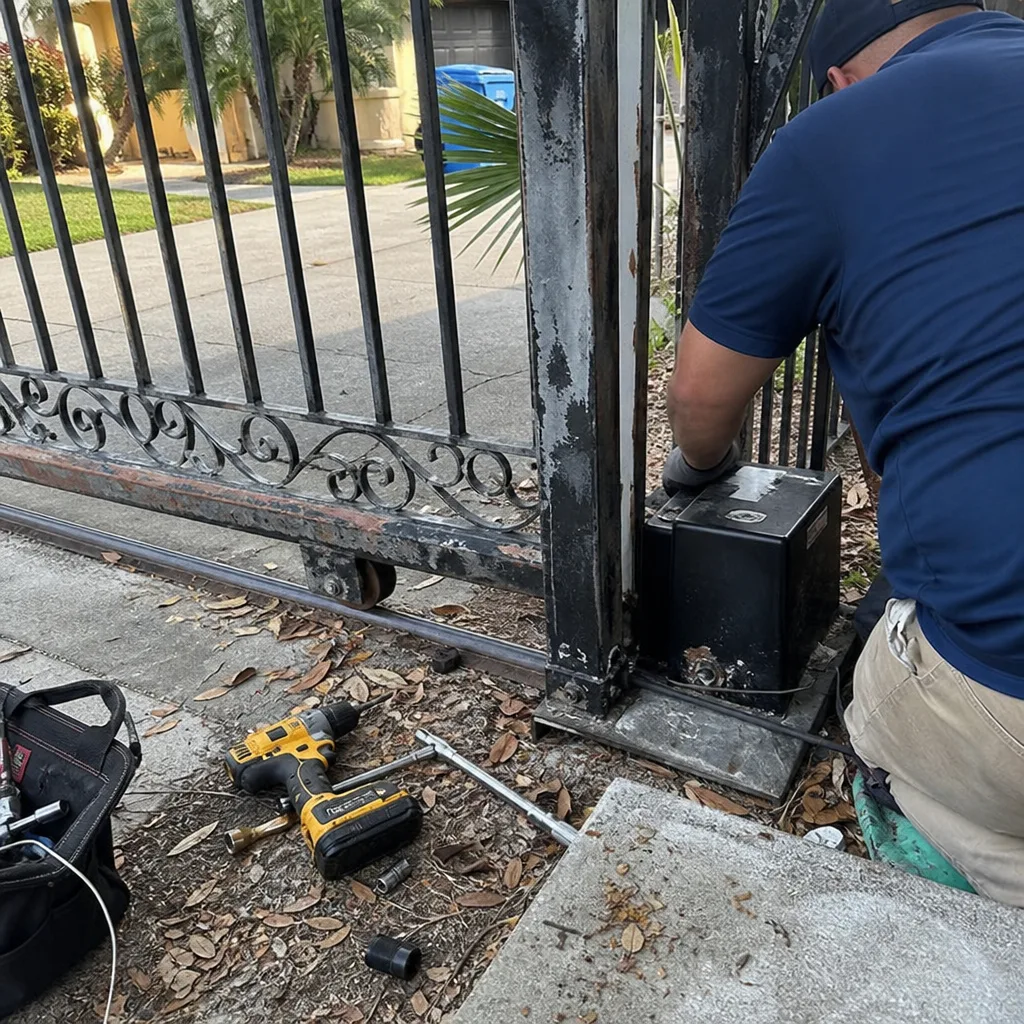 Before
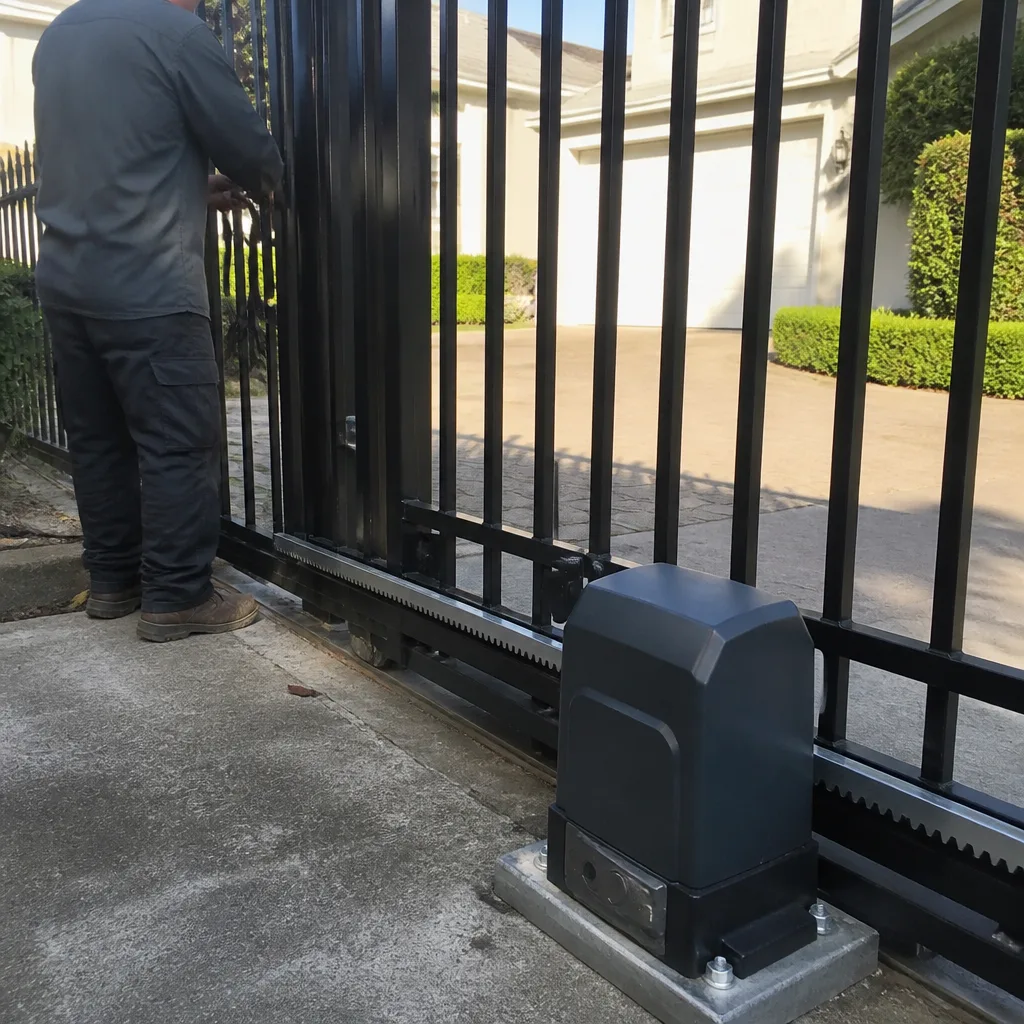 After
After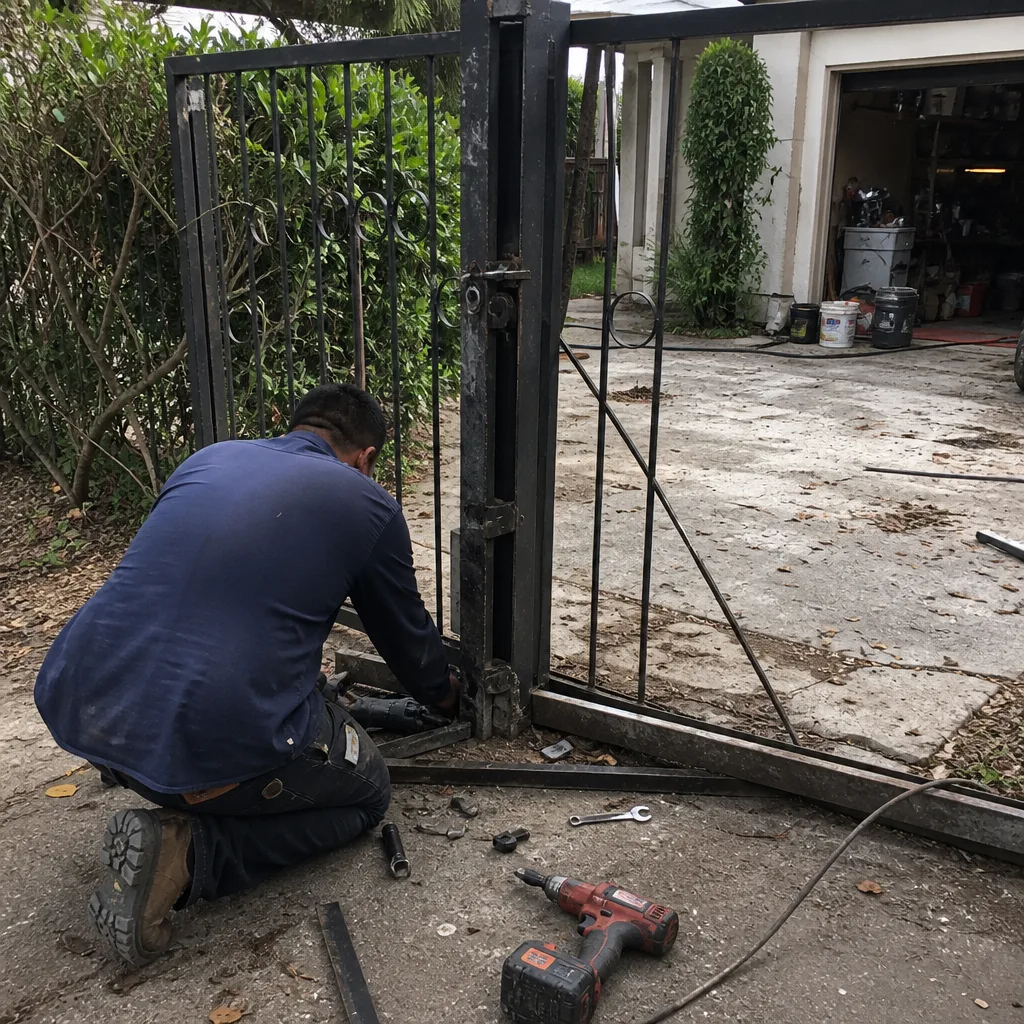 Before
 After
After Before
 After
After